

Your closest business rival may not be the company taking customers from you in Google Maps. A local SEO competitor analysis identifies businesses appearing in local search results for nearby service searches, then turns those findings into practical website, profile, and reputation improvements.
I use this process to separate surface-level comparisons from signals that affect calls, direction requests, website visits, and estimates. Start with real search results, then document the gaps that fit your budget and capacity.
Key Takeaways
- Your true local competitors are businesses appearing for the same services in local search results, even if they operate in another neighborhood.
- Compare visibility across several searches and locations because local search rankings and the local pack often shift across town.
- Review Google Business Profile categories, services, photos, customer reviews, posts, hours, and links before drawing conclusions.
- Check whether competitor pages match search intent and make it easy for mobile visitors to call or request service.
- Treat citations and backlinks as evidence of trust, not shortcuts. Accurate information and relevant local mentions matter more than raw volume.
- Prioritize improvements using actionable insights, likely business impact, effort, and your ability to complete them well.
Know What a Competitor Analysis Measures
A useful analysis measures search visibility, not only market share. A roofing company may compete with several nearby roofers for referrals, yet a restoration company could appear above it for “emergency roof repair” searches.
Offline competitors and search competitors differ
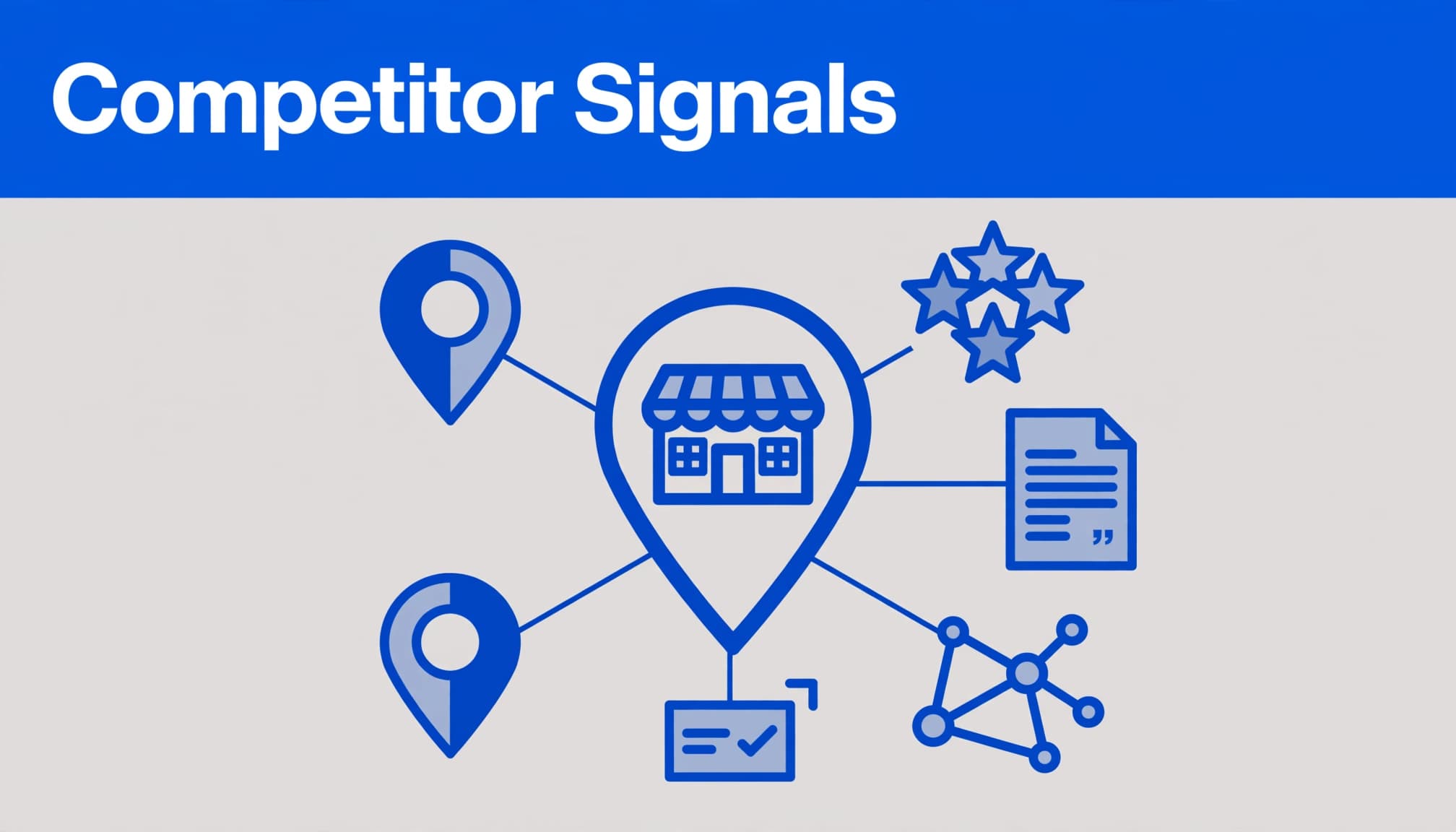
I begin by listing familiar competitors, then I set that list aside. Search the services you want to sell, such as “AC repair Fort Myers,” “commercial electrician near me,” or “kitchen remodeling Lehigh Acres.” The businesses in the Local Pack and the first organic results are your online competitors for that query. Assess whether each one matches the wording and search intent.
A company can rank because its profile, reviews, service page, and local links align with that search. It doesn’t need to be your nearest physical rival. Therefore, build a comparison group of three Local Pack leaders, then add businesses ranking in positions four through 10.
Weigh signals instead of chasing one metric
Google says local results mainly rely on relevance, distance, and prominence. These local ranking factors work together. You can improve relevance and prominence, but you can’t move your office closer to every searcher.
Distance creates geographic relevance, so a nearby competitor may outrank a stronger business farther away. When competitors have stronger reviews but thin websites, don’t assume reviews explain everything. Their category may match the query better, their address may be closer, or their local reputation may be stronger. I record the likely reason for each result instead of assigning a made-up percentage to any signal.
A single strong competitor signal rarely explains a local ranking. Look for repeated patterns across search results, profiles, pages, and customer actions.
Start Your Local SEO Competitor Analysis With Search Results
The fastest way to find real opportunities is to use the words customers use when they need your service. Search volume matters, yet a lower-volume urgent service query can bring better leads than a broad phrase.
Build a focused local keyword list
Start with your actual services, then add city names, neighborhoods, landmarks, and urgency modifiers. Use local keyword research to organize these ideas into a focused query list. A plumber might research “water heater repair Cape Coral,” “leak detection near me,” and “emergency plumber Fort Myers.”
Google Autocomplete, Keyword Planner, Search Console, estimate requests, and call notes can all reveal how your local audience searches. Recurring service, neighborhood, and question-based queries can also guide useful local content marketing topics. I avoid targeting a phrase simply because a tool suggests it. If you don’t offer that service or can’t reach that area promptly, the traffic will create poor-fit leads.
Review the top results for each phrase. Note whether competitors use a dedicated service page, location pages, or a general homepage. That evidence tells you what kind of page a searcher expects.
Check maps from more than one location
Results vary by searcher location, device, and query wording. I test three to five keyword variations from several points around the service area, including neighborhoods where you want more work.
Run searches in a private browser window, with location settings controlled as carefully as possible. Then record the businesses appearing in Maps and the Local Pack. A single search from your office only tells you how visible you are near your office.
Use a simple spreadsheet with columns for query, search location, Map rank, organic rank, business name, and notes. Competitor analysis tools such as BrightLocal, Semrush, Ahrefs, Moz, and SEOptimer can help organize research, but they should support, not replace, firsthand search and sales data.
Audit Each Competitor’s Google Business Profile
Google Business Profile is often the clearest explanation for local search differences. Compare your listing against the same competitors for the same queries, not against every business in town.
Review relevance and profile completeness
Check the primary category first, then look at secondary categories, services, business description, service area, hours, appointment links, and website destination. Google allows owners to update profile information and photos, so outdated details are usually fixable.
I also review photo quality and recency. Real project photos, staff images, vehicles, and storefront shots help customers judge whether a business looks active and legitimate. Check Google Posts as well, especially for seasonal offers or time-sensitive services. Remove offers after they expire.
Your profile and website should tell the same story. If a profile promotes pool repair while the linked page vaguely describes home services, both Google and customers receive weaker context.
Compare customer reviews without copying bad habits
Record each competitor’s rating, approximate review count, recent review dates, recurring themes, and owner responses. More reviews and positive ratings can help a business’s local standing, according to Google’s guidance, but no published formula tells you how much weight they carry.
Read the wording, not only the stars. Use recurring complaints, praise, and owner responses to improve service and shape your reputation management process. Competitors may receive frequent praise for same-day service, clear pricing, or careful cleanup. Those patterns can reveal a customer expectation your business should address honestly on its pages and in its operations.
Request genuine feedback from all customers after completed work, using a consistent process. Google’s review request guidance prohibits incentives such as discounts or free items in exchange for reviews. Never filter requests so only happy customers receive them.
Compare Websites, Citations, and Local Content
A profile earns attention, but the site must help the visitor take the next step. I compare competitor websites on a phone before reviewing desktop details because many local searches begin on mobile devices.
Inspect pages that match search intent
Open the page linked from each competitor profile. Check whether it answers the service query, identifies the actual service area, displays proof of work, and provides a clear call, form, or booking path. Test every phone link and form yourself.
Compare whether competitors answer local customer questions with useful service and area content. This offers a practical measure of local content marketing.
Look for title tags, headings, internal links, service-area details, conversion elements, and helpful service copy as part of on-page SEO. A dedicated page makes sense when you can add real local details, relevant projects, and useful answers. Copying one thin page across dozens of cities does not create a convincing local presence.
Schema markup can clarify business details for search engines. Google’s LocalBusiness structured data documentation explains how eligible pages can appear in enhanced Search results. I treat local business schema as support for accurate visible information, never a substitute for useful content.
Check citations and NAP consistency
Local citations are listings that mention your business name, address, phone number, website, or hours. Compare competitors on places customers actually use, including Yelp, Facebook, Bing Places, Apple Maps, Yellow Pages, Foursquare, and Data Axle.
Check whether your own NAP information matches exactly across major listings. A former phone number, old suite number, wrong hours, or duplicate profile creates friction for customers and conflicting signals online.
Don’t waste time submitting to every directory you find. First fix inaccurate listings, claim important profiles, and fill meaningful gaps where credible competitors appear. A consistent listing footprint supports trust, while a pile of weak directories rarely solves a relevance problem.
Review Local Links, local link building, and map-grid visibility
Backlinks still matter because local organizations, suppliers, news outlets, chambers, schools, and event sites can introduce your business to customers and search engines. The source and context matter more than the count. Genuine community partnerships can support local content marketing while earning useful local links.
Find link opportunities competitors already earned
Use Ahrefs, Semrush, or Moz to review the backlink profile, referring domains, and local sources associated with competitors that repeatedly outrank you. Look for regional publications, local sponsorships, trade associations, supplier directories, charity events, and community partnerships.
I don’t copy every backlink. A link is worth pursuing when it represents a real relationship or useful listing that fits your business. If a competitor receives a link from a local youth sports sponsor page, support that organization only if you genuinely want the relationship.
Avoid paid link schemes, irrelevant directories, and automated outreach. Those tactics can create risk without building customer trust.
Measure visibility across your service area
A rank tracker or grid report measures map-grid visibility, adding geographic detail to ordinary rank checking. A 5-by-5 or 7-by-7 grid centered on your business can show where you appear in Maps and where competitors take over.
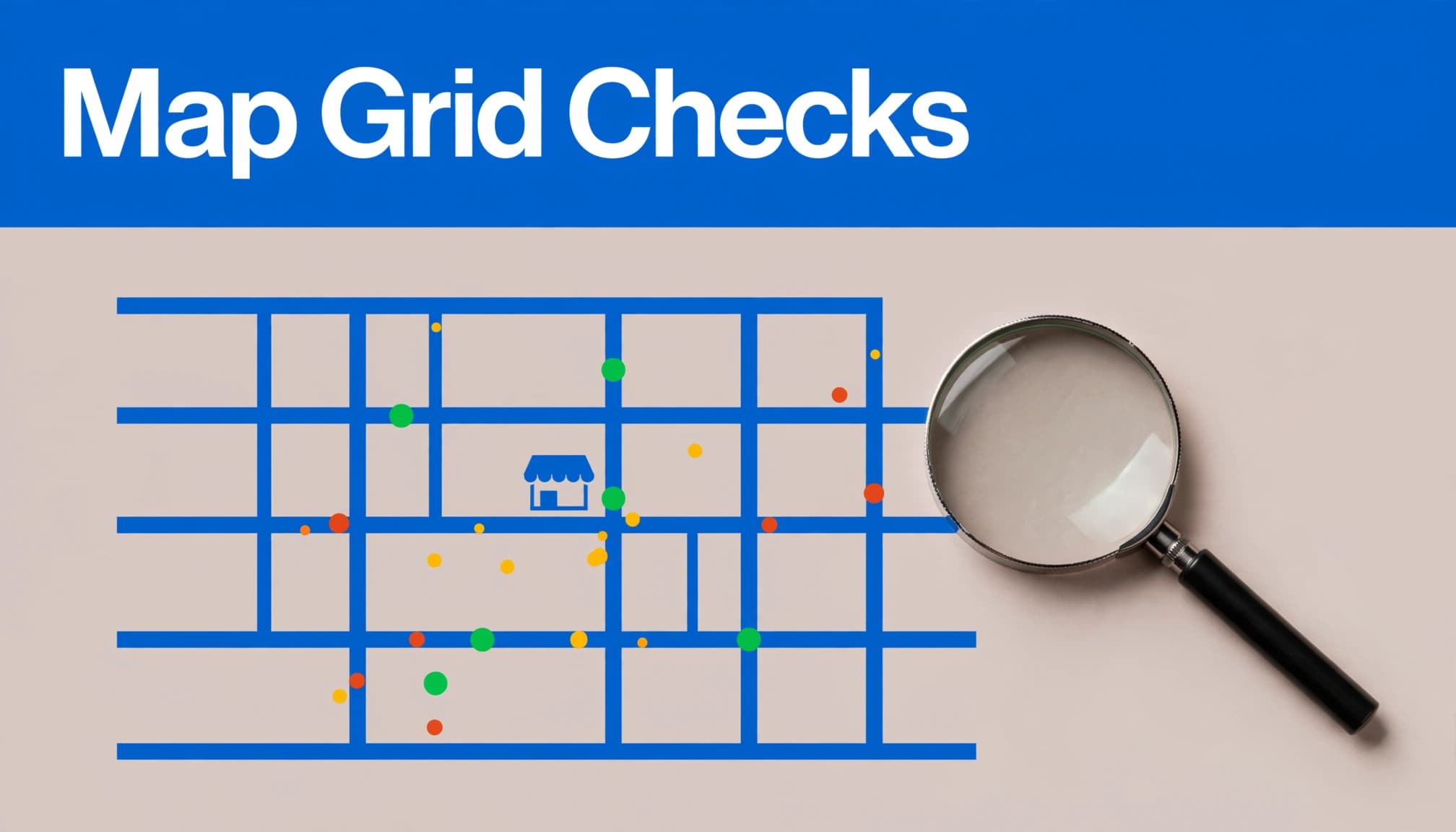
For example, you may rank well within a mile of your address but disappear in a nearby high-value neighborhood. That result may point to distance, weak relevance for that area, or stronger competitors there. Track the same core searches on the same grid to monitor map-grid visibility monthly, then conduct a broader review each quarter.
Turn Findings Into a Practical Plan
Research only matters when it produces actionable insights and a clear next action. I keep the final plan short enough for a small business to complete.
Rank opportunities by impact and effort
Score each gap based on likely lead impact, effort, and confidence. Start with problems that block customers or confuse search engines, such as an incorrect phone number, broken contact form, duplicate profile, missing primary service page, or mismatched hours.
| Finding | Likely priority | First action |
|---|---|---|
| Profile links to a generic homepage | High | Create a relevant local landing page |
| Old phone number appears in major directories | High | Correct and document core citations |
| Competitors have fresh project photos | Medium | Build a monthly photo collection process |
| A local association links to competitors | Medium | Review membership or sponsorship fit |
This order prevents a common mistake: chasing backlinks while the website fails to convert existing visitors. A strong Google Business Profile should match the service promise and work cleanly on a phone.
Turn recurring service, location, and customer-question gaps into a practical local content marketing calendar. Review each topic against customer needs before adding it to the publishing schedule.
Track local search rankings and leads
Google Search Console measures impressions, clicks, click-through rate, and pages. Google Business Profile performance adds context, including calls, direction requests, website actions, and profile interactions. Neither report tells the full story alone.
If impressions rise but clicks stay flat, I review page titles and search intent. If profile actions decline while organic website traffic holds, I inspect categories, photos, hours, and the phone path. When online visibility rises but estimates don’t, the issue may be response speed, pricing expectations, form delivery, or the quality of incoming leads.
Compare these measures monthly, then use the results to update priorities, fix conversion problems, and focus resources on the gaps most likely to generate qualified inquiries.
Frequently Asked Questions
How often should a small business analyze local competitors?
I recommend a light monthly check of rankings, profile changes, reviews, and lead actions. Complete a deeper comparison every quarter, or sooner after a competitor opens nearby, a business moves, or your leads drop unexpectedly.
Keep a dated record of major changes. When you change categories, rewrite a page, update citations, and launch ads at once, you can’t tell which action affected results.
What if a competitor has more customer reviews but ranks below my business?
That pattern usually means reviews aren’t deciding the result alone. Your business may be closer to the searcher, have stronger category relevance, offer more useful website content, or have better-known local references.
Keep improving your own review process, but don’t chase volume. Focus on authentic service, accurate details, and a page that matches what customers need.
Final Thoughts
A local SEO competitor analysis gives you a better target than vague advice to “rank higher.” It shows where competitors win, where their advantage is limited, and which improvements fit your actual business.
The strongest plan fixes customer-facing gaps first, then builds proof through accurate listings, useful pages, real reviews, and relevant local relationships.