

A pattern of suspicious activity or fake reviews can make a small business owner question every new customer. When I help businesses report Google reviews, I start by separating unfair criticism from content that breaks Google’s rules.
Google doesn’t give business owners a delete button. You can report a review, provide evidence, track the decision, and appeal when the case qualifies. Google may remove negative reviews only when there is a valid reason, not simply because they lower your average rating. The process starts with identifying the policy violation clearly.

Key Takeaways
- A low rating or unfavorable feedback alone is not grounds for removing a Google review; the content must violate a specific Google policy.
- Before reporting a review, save screenshots and gather evidence such as duplicate wording, suspicious account activity, missing customer records, or personal information.
- Use the Business Profile or Reviews Management Tool to report each violating review separately, select the closest policy category, and track the decision.
- If Google denies the request, eligible reviews may receive a one-time appeal with a direct link, clear policy explanation, and supporting evidence.
- Respond calmly to legitimate complaints, report extortion through the appropriate forms, and build authentic review volume without incentives or rating pressure.
Check the review before reporting it
A low rating alone isn’t grounds for removal. Genuine customer reviews can be critical without violating Google’s rules. Customers may complain about pricing, delays, communication, service quality, or a disappointing experience.
Before I submit a report, I ask three questions:
- Does the reviewer appear to have a genuine connection to the business?
- Does the content represent a specific policy violation?
- Can I support my report with facts rather than frustration?
I also save a screenshot showing the reviewer’s name, rating, text, date, and any attached images. Reviews can change or disappear while a case is under review, so keeping a record helps if I need to appeal later.
Google’s review reporting instructions explain the basic process and make one point clear: only a potentially removable review that violates its content policies qualifies for removal.
How to flag Google reviews from your Business Profile
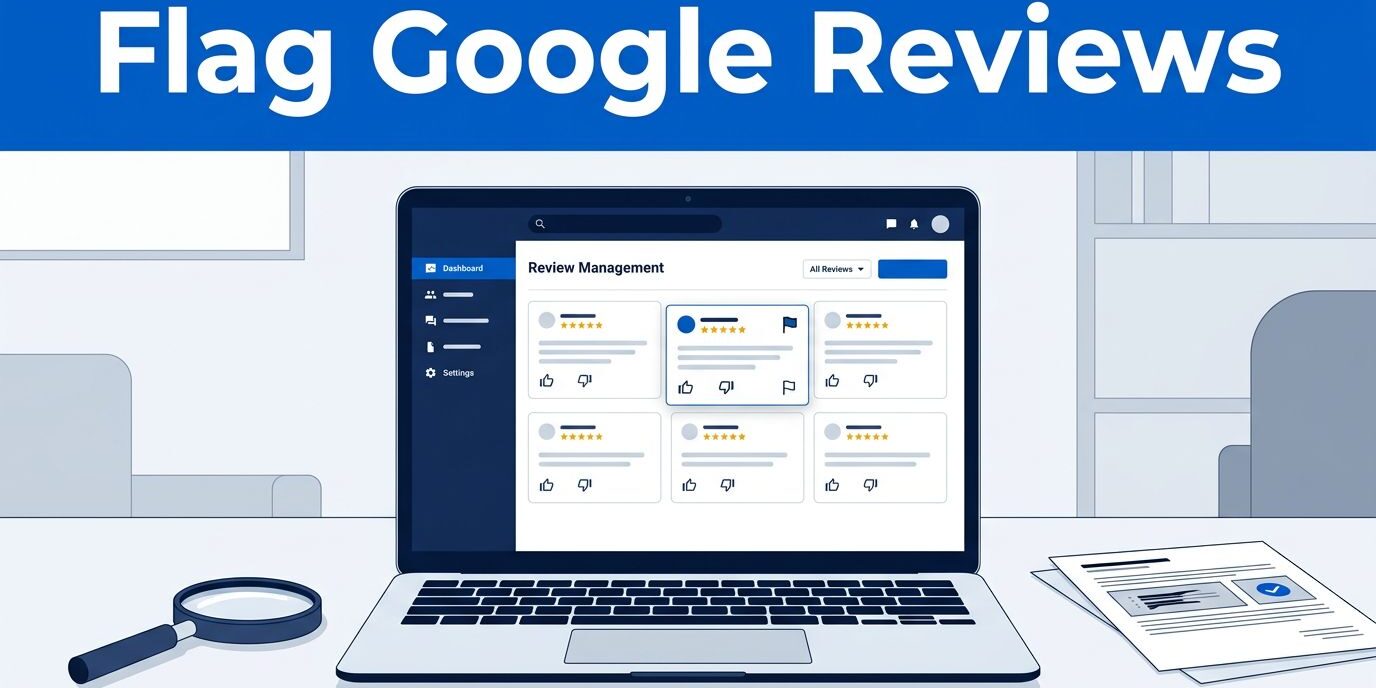
You can report inappropriate reviews from the Google Business Profile connected to your business. The labels may vary slightly depending on Google’s current interface, but the process generally follows these steps:
- Sign in to the Google account that manages the profile.
- Search for your business on Google, or open the profile through the dashboard.
- Select Read reviews.
- Find the review you want to report and open the three-dot menu beside it.
- Choose Report review or Report.
- Select the reason that best matches the violation, such as spam or profanity.
- Submit the report.
If the menu isn’t available or you need to review a prior submission, use the Reviews Management Tool.
Choose the closest policy category instead of selecting a random option because you dislike the review. If you describe a review as fake, support that claim with evidence rather than using the phrase as an accusation.
I recommend reporting each violating review separately. If several reviews appear connected, keep the wording consistent but explain the evidence for each one. Include dates, duplicate phrases, suspicious account activity, or proof that the reviewer never used the service.
Google may take around three days to complete an initial review, although timing can vary. Avoid submitting the same report repeatedly during that period. Duplicate submissions can make your records harder to follow and won’t necessarily speed up Google’s decision.
Track reports in the Reviews Management Tool
The Reviews Management Tool is useful when you need to report several reviews or check a previous report’s status. It also helps when reporting options are difficult to find inside the profile dashboard.
To use it, sign in with the email address associated with the Business Profile. Then select the correct business and choose Report a new review for removal. Select Report beside the review, choose the relevant category in the new window, and submit the request.
Return to the tool later to check reported reviews. You may see a status such as decision pending, removed, or no issue found. When fake reviews are removed after a confirmed violation, they should no longer appear on Google Search or Maps. Their presence in local search results may change, but rankings won’t necessarily shift immediately.
Keep a simple record with the review link, report date, selected category, screenshots, and any email from Google. I use this record to avoid filing duplicate reports and keep the details organized if Google rejects the first request.
Google reviews are evaluated against policy, not against the business owner’s preferred rating. A legitimate complaint can stay online even when the business strongly disagrees with it.
Which reviews violate Google’s content policies?
Google’s prohibited and restricted content policy covers more than profanity. A review may qualify for removal when it includes:
- Fake engagement, such as fake reviews from people with no genuine customer connection, paid ratings, or coordinated posts.
- Conflict of interest, including reviews posted by competitors, current employees, former employees, or people connected to the business.
- Spam or advertising, including repeated promotional text, links, or content posted across multiple business profiles.
- Off-topic material, such as political arguments or personal complaints that don’t relate to the business.
- Harassment, threats, hate speech, or slurs aimed at the owner, staff, customers, or another protected group.
- Personal information, including private phone numbers, home addresses, email addresses, or other identifying details shared without permission.
- Illegal or dangerous content, such as instructions that encourage unlawful activity or threats of physical harm.
- Impersonation, where a reviewer pretends to be another person or misrepresents a business relationship.
These are the situations in which a business may seek to remove negative reviews. A low rating or unfavorable feedback alone doesn’t qualify.
A review doesn’t need to be completely fabricated to contain a removable violation. For example, a real customer might post a private employee phone number or make a threat. Report the specific prohibited part and explain what happened.
Google can also take action against businesses that manipulate reviews by buying positive ratings or offering rewards. These practices create fake engagement problems, and asking staff to post customer testimonials may lead to business profile restrictions. An unusual spike in review volume can also raise concerns. The Federal Trade Commission also prohibits buying and selling fake reviews, so a vendor promising hundreds of positive ratings creates legal and platform risk.
What to do after Google denies the report
A denial doesn’t always mean your concern is invalid. It may mean the first report lacked a clear policy connection. Google also may not have been able to verify the submitted evidence when you tried to report inappropriate reviews.
Google generally provides a one-time appeal for eligible review removal requests. You can appeal eligible reviews, up to 10 in one submission, but the route isn’t for every review the business dislikes. Before using that one-time appeal, make the case evidence-based instead of repeating the same sentence.
A useful appeal includes:
- The reviewer’s name and direct review link.
- The exact policy category involved.
- A short explanation of the violation.
- Evidence that supports the explanation, including signs of fake reviews such as no matching transaction or duplicated text.
- The reason the content harms the integrity of the Business Profile.
For example, don’t write, “This customer is lying and wants to hurt us.” Write, “The reviewer claims to have received service on March 4, but the business had no appointment, invoice, payment, or customer record matching the name. The same text appears on two unrelated business profiles.”
When a group posts similar reviews within a short period, use Google’s Business Redressal Complaint Form. This route is more appropriate for coordinated attacks, impersonation, fraudulent activity, or a fake listing connected to the review campaign.
How to handle review extortion scams without paying
Review extortion scams often follow a recognizable pattern: multiple negative posts, sometimes fake reviews, followed by a payment demand. The person may then contact the business through WhatsApp or Telegram. Paying rarely solves the problem because they may demand more money later.
Report inappropriate reviews by saving the messages, phone numbers, usernames, payment requests, review links, and timestamps. Don’t negotiate publicly or accuse the person in a review response. Submit the evidence through Google’s Merchant Extortion Report Form. If coordinated fraudulent activity or a fake listing is involved, file a separate business redressal complaint through the appropriate channel as well.
If the messages include threats, fraud, or financial loss, preserve the original records and contact the appropriate law enforcement agency. Don’t delete the conversation before saving copies. Screenshots should show enough surrounding information to establish the account, date, and demand.
Google’s review reporting tips can help you identify the correct reporting path. I also recommend filing one organized report instead of sending scattered complaints through several channels.
Respond publicly while Google investigates
Reporting a review doesn’t remove it immediately, so your public response still matters. Future customers often compare customer reviews with the broader pattern of feedback before deciding whether the complaint seems credible.
Keep the response calm and short, and don’t focus only on the average rating; give readers a professional explanation. Don’t reveal private customer details, argue point by point, or call the reviewer a liar. If you can’t identify the transaction, invite the person to contact the business through an official channel while stating that you reported the content for review.
A response might read:
“We take customer concerns seriously, but we can’t match this review to a customer record. Please contact our office with the service date and account details so we can investigate. We have reported the review because it may not reflect a genuine customer experience.”
For a legitimate complaint, acknowledge the concern and offer a private way to resolve it. Don’t offer money, discounts, or gifts in exchange for deleting or changing the review.
Build authentic review volume over time
A steady flow of honest reviews won’t automatically remove fake content, but it gives customers better context. A sudden group of one-star reviews is easier to assess when the profile also contains a consistent history of feedback from real customers.
I ask businesses to request honest feedback after a completed job, appointment, or purchase. Consistent, unbiased requests can build review volume over time. The request should go to all appropriate customers, not only the people most likely to leave five stars. This helps gather balanced customer reviews, but it doesn’t guarantee a higher average rating. Incentives and rating pressure can violate Google’s policies and make the profile look manipulated.
Review collection works best when it fits the normal customer follow-up process. A short email or text can become part of a review collection system. Include the direct review link, business name, and a request for honest feedback. Keep the timing consistent, and avoid asking for dozens of reviews in one burst after months of silence.
I also check that the business name, phone number, service details, and contact information match across the website and local listings. This consistency can support local search results and local visibility. Strong organic SEO and web maintenance services can support that consistency, but no website improvement can replace genuine customer experiences.
Frequently Asked Questions
Can I flag a Google review just because it is negative?
No. A negative review can remain online when it reflects a genuine customer experience, even if the business disagrees with the feedback. Report it only when it violates a specific policy, such as fake engagement, harassment, spam, or the sharing of personal information.
How long does Google take to review a flagged review?
Google may take around three days to complete an initial review, although processing times can vary. Avoid submitting duplicate reports while you wait, and use the Reviews Management Tool to check the status.
What should I do if Google denies my review removal request?
Review the decision and determine whether you can connect the content to a clear policy violation with stronger evidence. Eligible requests generally have a one-time appeal, which should include the direct review link, exact policy category, concise explanation, and supporting records.
How do I report a review extortion scam?
Save the review links, messages, usernames, phone numbers, payment demands, and timestamps before deleting or changing anything. Submit the evidence through Google’s Merchant Extortion Report Form, and contact law enforcement when the situation involves threats, fraud, or financial loss.
Should I respond publicly while Google investigates a review?
Yes, a short and professional response can help future customers understand that you are addressing the issue. Avoid revealing private information, accusing the reviewer, or arguing point by point; invite the person to use an official contact channel when appropriate.
Conclusion
When you flag Google reviews, connect each report to a genuine policy concern. Document the review, use the appropriate reporting channel, and consider how your profile appears in local search results. Monitor the status, and reserve the one-time appeal for a well-supported case.
A legitimate negative review needs a professional response, not a review removal request. Fake engagement, harassment, spam, impersonation, and extortion require evidence and policy-based reporting. If review problems affect your local visibility, focus on honest review volume and Contact Us to discuss your website and SEO needs.