

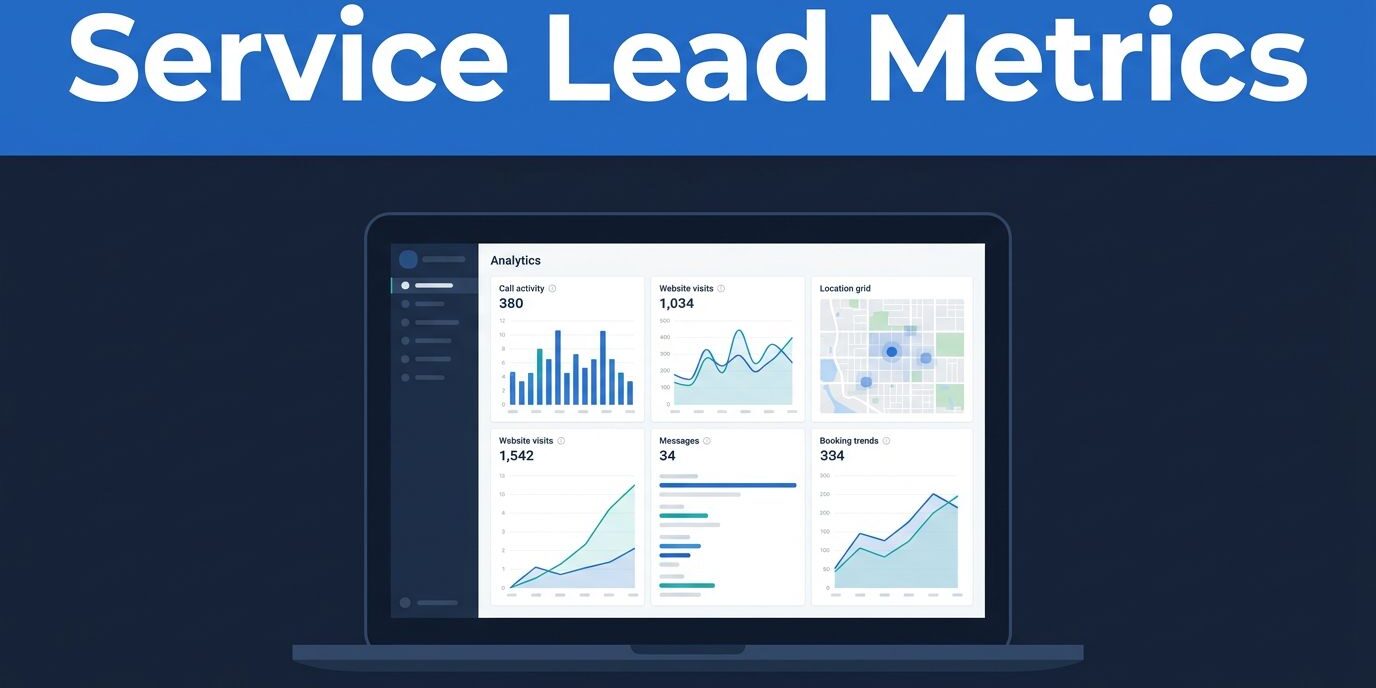
A profile can attract plenty of attention and still produce too few customers. I use Google Business Profile metrics along with Google Business Profile insights to find out whether local visibility is leading to calls, website visits, messages, and booked work.
Service businesses need more than a high view count. A plumber, contractor, landscaper, or home service company must know which searches create contact opportunities and whether strong local visibility in local search results across Google Search and Maps actually sends people to a page that converts.
Google reports these actions through the dashboard, but the numbers need context. Here are the Google Business Profile metrics and Google Business Profile insights I watch, how I interpret them, and how I connect profile activity to real revenue.
Key Takeaways
- Focus on metrics that drive customer actions, such as phone calls, messages, website clicks, and bookings, rather than just vanity metrics like total views.
- Compare Google Business Profile performance data with internal records like call logs, form submissions, and actual sales to measure true lead quality.
- Review search query insights monthly to ensure your profile appears for relevant local services rather than broad, unqualified searches.
- Pair your profile metrics with a well-designed, fast-loading landing page that makes it easy for local visitors to convert into paying customers.
What Google Business Profile performance data measures
The Business Profile performance report replaced the older Google Business Profile insights terminology. This data shows how people discover a business profile and what they do after viewing it.
I usually review the performance data inside Google Search by opening the verified profile and selecting Performance. You can also access it through the Google Maps app. Google explains the available reporting options in its Business Profile performance guidance.
The main categories tracked via Google Search and Maps include:
- Views from Google Search and Google Maps
- Searches that show discovery searches for categories and direct searches for business names
- Calls generated by the profile phone button
- Website clicks to the linked site
- Messages started through the profile
- Bookings completed through supported booking systems
- Direction requests for businesses with a customer-facing location
- Total interactions, which combines several customer interactions
Google counts Business Profile performance data from organic results and Google Ads. That matters when a business runs paid campaigns because the report may combine activity from both sources.
I also remind clients that viewing performance data does not always mean a completed lead. A call click shows that someone selected the phone button, not that the call connected or turned into a sale. Website clicks show interest, but they don’t prove that the visitor filled out a form.
Google Business Profile metrics that matter most
Not every number deserves the same attention. For most service businesses, I rank Google Business Profile metrics by how closely they connect with a conversation or sales opportunity.
| Metric | What it shows | How I use it |
|---|---|---|
| Searches | Terms connected with profile visibility | Find service and location demand |
| Calls | Clicks on the profile phone number | Compare phone interest over time |
| Website clicks | Visits sent to the website | Review landing page performance |
| Messages | Conversations started through Google | Track another direct contact path |
| Bookings | Completed appointments through supported tools | Measure scheduled service demand |
| Views | Profile exposure on Search and Maps | Evaluate visibility before actions |
| Direction requests | Requests for travel directions | Useful for storefront businesses |
Calls and messages
Phone calls are often the most valuable action for service companies, reflecting strong customer intent when someone needs help quickly with emergency plumbing, air conditioning repair, or roofing. This type of profile engagement suggests serious interest, but I compare it with the actual call log whenever possible.
If phone calls increase while qualified leads stay flat, I check whether the phone number works, whether staff answer promptly, and whether the listing describes the right service. Implementing call tracking can help measure marketing sources, but I keep the main business number consistent across the website and local listings.
Messages deserve similar attention as part of your overall customer interactions. Some customers prefer writing a question before committing to a call through the messaging feature. I check response times and conversation quality because an unanswered message is a missed opportunity, even when the metric looks positive.
Website clicks and bookings
Website clicks tell me whether the profile creates enough interest to move someone to the next step. The linked page should show the relevant service, service area, phone number, current hours, reviews, and an obvious contact option.
I test that path on a phone. The phone link should work, the form should ask only for useful information, and the confirmation should explain what happens next. If a profile sends traffic to a slow or confusing page, strong customer interactions may produce little business.
Bookings provide a stronger signal when the business uses an approved scheduling system to track booking metrics. However, I still compare completed bookings with the scheduling platform and customer records. Reporting systems can miss conversions when a booking tool, form, or CRM connection breaks.
How to read views, searches, and visibility
Views are useful, but they are a starting point rather than a success measure. A profile can receive many views because it appears for broad searches that don’t match the services a company sells, which means your overall search visibility requires careful analysis.
Search terms offer more practical detail when reviewing Google Business Profile insights. I look for search queries that include the actual service, such as “driveway paving,” “water heater repair,” or “Fort Myers electrician.” This data helps me determine whether traffic stems from unbranded discovery searches or loyal customer direct searches, allowing me to compare what Google associates with the business against the services the company wants to promote.
Google’s Searches metric doesn’t update continuously. Google says it updates at the beginning of each month, and new data can take several days to appear. I avoid reacting to a partial reporting period because the numbers may not be complete.
A sudden rise in views can have several causes:
- A new service page may improve relevance and local ranking.
- Seasonal demand may increase searches.
- A local competitor may have changed its listing.
- A paid campaign may add profile exposure.
- A business update may affect how Google displays the profile.
The same applies to a drop. I check for changes in business hours, categories, service areas, reviews, website availability, and phone functionality before assuming the profile lost visibility.
Service-area businesses need extra care when evaluating geographic performance. These companies visit customers instead of serving them at a public storefront, so direction requests may have little value for operators monitoring local ranking shifts. Calls, website clicks, messages, and bookings usually provide a clearer picture when examining broader Google Business Profile insights.
Connect profile actions with qualified leads
The best Google Business Profile metrics answer a business question: Did this activity create a realistic opportunity for revenue? Evaluating customer intent helps determine whether profile viewers are searching for quick answers or actively looking to hire a contractor.
I compare profile actions with call records, form submissions, booked appointments, and closed sales. For example, 40 website clicks mean little if the destination page produces no inquiries. Ten calls may be excellent if several become profitable jobs and reflect high customer intent.
I also separate lead quality by service. A company may receive many inquiries for small repairs while trying to grow larger installation projects. Total leads alone won’t show whether the marketing supports the desired work.
Using UTM parameters on the profile website link can help separate Google Business Profile visits inside Google Analytics. I compare those visits with the profile website-click count, while allowing for differences between reporting systems. Google Analytics also helps reveal overall conversion rates for traffic originating from the map listing.
Reviewing Google Business Profile insights alongside Google Analytics data gives a clearer picture of local SEO performance. The website must support the promise made by the profile. If the listing promotes commercial roofing but the link opens a generic homepage, visitors must search for the correct information. I prefer a focused service page with a clear headline, location details, project photos, reviews, and a direct estimate request.
This is where web design and SEO services can support local marketing and improve local SEO performance. A profile may earn the click, but the website has to make the next action easy.
Reviews also affect the conversion path. Effective review management and timely responses build credibility before visitors ever reach your site. I ask customers for honest feedback after service, never a guaranteed five-star rating or an incentivized review. I respond to negative reviews calmly because future customers often judge the response as closely as the original complaint.
Build a practical monthly reporting routine
I recommend a monthly review with a quarterly comparison. Monthly checks catch broken links, incorrect hours, missed messages, and unusual call changes. Quarterly comparisons reveal whether broader SEO work is improving the trend by evaluating your Business Profile performance over time.
I record:
- Profile views and searches
- Calls, messages, website clicks, and bookings
- The leading search terms
- The previous period’s totals
- Changes to services, categories, hours, or service areas
- Leads that became estimates, appointments, or sales
For companies with multiple locations, reviewing performance data alongside Google Analytics helps maintain consistency across regions. You can also use an automated reporting tool to streamline data collection, though a manual check works well for single sites.
I also compare the profile with the website and other business listings. The name, phone number, service area, and hours should match wherever customers can find them. Old directory information, a former phone number, or a disconnected scheduling tool can create confusion and cause profile edits to revert.
Google’s performance data separates impressions by device and source, including mobile Search, desktop Search, mobile Maps, and desktop Maps. Most small businesses don’t need API access, but this detail explains why numbers may differ across reports when compared to Google Business Profile insights.
A clean record makes changes easier to evaluate. If I update a service page in April and see more relevant searches in May, I have a reasonable basis for further testing. When five unrelated changes happen at once, the results become difficult to interpret.
Use the numbers to guide better decisions
Google Business Profile metrics are most useful when they lead to a specific action. Low visibility for important search queries in local search results may point to weak profile categories, unclear service descriptions, or missing website content. High views with few calls may indicate a poor offer, weak reviews, or a mismatch between the search and the business.
High website clicks with few form submissions usually send me to the landing page and contact process. Monitoring Google Business Profile insights helps me troubleshoot these drops in profile engagement before they hurt revenue. I check mobile layout, page speed, form delivery, confirmation messages, and whether the requested service is easy to identify.
I don’t treat local ranking as the only measure of progress. A business can appear in different positions across neighborhoods, devices, and search queries, especially when managing multiple locations. Lead quality gives the report practical meaning.
When the profile, website, and customer records agree, the monthly review becomes much more than a visibility report. It becomes a way to use Google Business Profile insights to decide which service pages need improvement, which contact paths need testing, and which marketing efforts deserve more attention. Reviewing your Google Business Profile metrics consistently ensures that your operational decisions align with real customer demand.
Frequently Asked Questions
What are the most important Google Business Profile metrics for service businesses?
For most service companies, direct actions like phone calls, messages, website clicks, and bookings matter most because they reflect high customer intent and direct contact opportunities.
Why are my profile views high, but I am not getting more leads?
High views often come from broad searches or unbranded discovery queries that do not match the specific services you sell. It can also indicate a weak offer, poor reviews, or a landing page that fails to convert visitors.
How often should I check my Google Business Profile performance data?
A monthly review combined with a quarterly comparison is ideal for catching broken links, incorrect hours, and unusual trends over time. Avoid reacting to partial data since Google’s search metrics can take several days to update fully.
Do Google Business Profile metrics include paid ad clicks?
Yes, Google counts performance data from both organic local search results and Google Ads. If you run paid campaigns, your report may combine activity from these different sources.
Conclusion
The most useful Google Business Profile metrics are the ones closest to customer action. Views and searches show reach, while calls, messages, website clicks, bookings, and qualified leads show business value. By regularly monitoring these Google Business Profile metrics alongside routine Google Business Profile insights, you ensure that your efforts drive true business impact rather than just vanity traffic.
I use the numbers alongside call records, form testing, review activity, and website performance. That approach prevents a busy dashboard from hiding a weak conversion path and ultimately improves your local SEO performance to secure sustained search visibility in local search results. If you need help connecting your local profile with a stronger website and SEO plan, Contact Us for a free consultation.