

A tracking number can answer a simple question: did your marketing efforts bring this call, or not?
I like call tracking because guessing is expensive. At the same time, I have seen business owners hurt their local visibility by swapping phone numbers in the wrong places. It is important to clarify that this discussion focuses on your Google Business Profile, which many people still refer to by its former name, Google My Business. The right move is to track calls without muddying your business information, and that is where most of the confusion starts.
Key Takeaways
- Call tracking provides valuable insights into lead attribution, helping you verify if your Google Business Profile is successfully converting searchers into phone leads.
- Maintaining NAP (Name, Address, Phone) consistency is critical for local SEO; avoid confusing search engines by using different phone numbers across various business directories.
- A balanced approach involves using a tracking number as the primary contact on your profile while listing your actual business number in secondary fields to ensure consistency.
- Third-party tracking software often provides more reliable data and granular insights, such as call recordings and logs, than Google’s built-in reporting features.
- Tracking is most beneficial for high-volume service businesses; if your call volume is low, the complexity of managing an additional tracking number may outweigh the analytical benefits.
Why business owners want call tracking in the first place
Phone calls still close a lot of local business. If you run a law firm, dental office, plumbing company, or any service business, the phone often matters more than a form fill.
That is why a Google Business Profile tracking number is tempting. Using a dedicated call tracking number can tell you whether a caller found you through Google Search and Maps, and that helps you improve lead attribution to measure exactly what your Google Business Profile is doing. If you are spending money on local marketing, I do not see much value in flying blind.
A good tracking setup also helps with real operations. You can monitor call history to spot missed calls, review call logs, and see patterns by day or hour. Some call tracking software even offers recordings or transcripts, which can show if your staff is handling leads well.
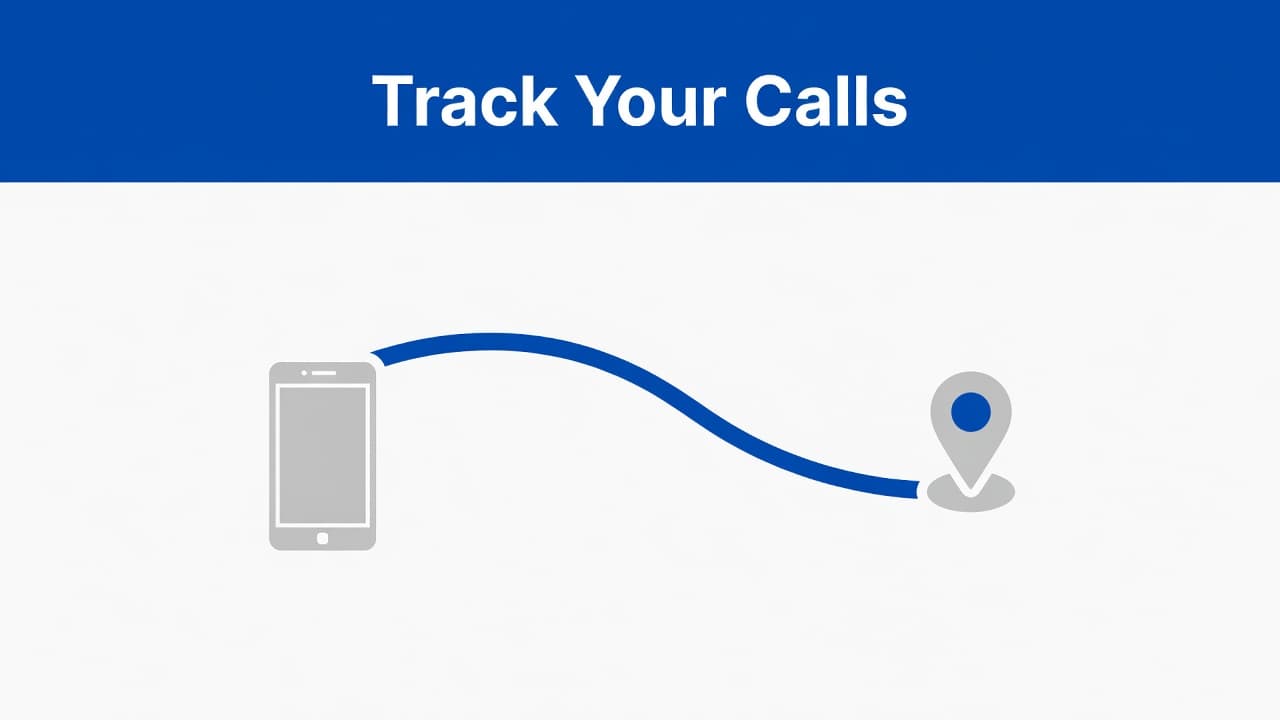
Call tracking helps connect search and map visibility to real phone leads by identifying the tracking source.
Still, I would not rely on Google’s own call history features alone. Reporting has been spotty for some businesses, and a recent discussion among local search professionals pointed to changes in Google’s built-in call stats. Because of that, many owners use third-party call tracking software instead of trusting Google to be the full record.
So yes, the upside is real. Better call data can show which channels bring leads, where calls get missed, and whether your listing pulls its weight. But that upside only helps when the setup stays clean.
When a tracking number on Google Business Profile makes sense
I usually recommend a tracking number when phone calls are a main source of leads and someone on the team will manage the setup. If nobody can keep the data organized, the extra number creates more noise than value.
This quick view makes the tradeoff easier to judge.
| Situation | Good fit? | Why |
|---|---|---|
| Most leads come by phone | Yes | Call attribution matters more |
| You can keep one main business number across your site and directories | Yes | NAP consistency stays stronger |
| You want data only for Google Search and Maps | Maybe not | Built-in reporting can be incomplete |
| You plan to replace your real number everywhere | No | Phone consistency can break |
The biggest risk is phone number consistency. Local SEO still depends on clear name address phone number details across your website, directories, and profiles. If Google sees one number, Yelp sees another, and your website shows a third, you are asking for confusion.
That does not mean you should avoid tracking. It means you need a plan. If you are already investing in search engine optimization for small businesses, call data becomes much more useful because you can tie your local search performance to real leads instead of just monitoring basic website visits.
I think tracking makes the most sense for service-area businesses, busy offices, and multi-location companies. It also helps when calls need follow-up, because missed opportunities are easier to see. On the other hand, if your business gets only a handful of calls each month, a new number may not be worth the extra upkeep.
How I would set it up without hurting local visibility
The simple rule is easy to remember.
Use the tracking number for measurement, but keep your main business number alive where consistency matters.
That means your long-term number should still exist on your website and in your core citations. In many cases, the safer local SEO approach is to keep the real number as the business anchor across the web, then use the tracking line inside the profile setup with care.
If I were setting up a verified business profile today, I would follow these steps:
- I would keep my primary phone number on my website, major directory listings, and any place that acts as a core business reference.
- For the Google Business Profile, I would place the call tracking number in the primary phone field to capture data from Google Search and Maps. To maintain consistency, I would then place my primary phone number in the additional phone number or secondary phone number slots.
- Alternatively, you can use a Google forwarding number to track call metrics while allowing Google to manage the connection.
- I would route the tracking line to the normal business phone so customers never experience a change in service.
- I would test calls every month and fix any mismatch fast to ensure accurate reporting.
To gain a more complete picture, I would also add UTM parameters to the website link in the profile. This allows you to track website visits in Google Analytics alongside your click-to-call metrics.
For multi-location businesses, I would not reuse one tracking number across every branch. Each location should have its own unique setup to keep reporting clean and avoid mixing leads from different markets.
I also would not treat call tracking as a substitute for a solid website and listing strategy. If your site is weak, your listing details are inconsistent, or your pages do not support local intent, call data will not solve the underlying problem. Stronger local SEO performance usually comes from the mix of profile accuracy, site quality, and smart follow-up. If you want help lining all of that up, you can Contact Us.
Frequently Asked Questions
Will using a tracking number hurt my local SEO rankings?
It can, but only if you fail to maintain consistent business information across the web. If you use a tracking number in your Google Business Profile, ensure your real business number remains the primary contact on your website and core citation sites to prevent NAP inconsistency.
Can I use the same tracking number for all my business locations?
No, you should never reuse the same tracking number across multiple branches. Each location requires a unique tracking number to ensure your call data remains accurate and isn’t mixed between different geographic markets.
Is Google’s built-in call history feature sufficient for tracking?
While Google offers basic call reporting, it is often considered incomplete by search professionals. Many businesses prefer third-party tracking software because it offers more robust features, such as call recordings and reliable historical logs, that aren’t available through Google’s native tools.
What is the best way to route calls with a tracking number?
Your tracking number should be configured to automatically forward all incoming calls to your standard business line. This ensures that your staff receives calls as they normally would, providing a seamless experience for your customers while you collect the necessary performance data.
Conclusion
I would use a call tracking number on your Google Business Profile when tracking phone leads is a priority and you can ensure the setup remains clean.
I would skip it if your team cannot maintain NAP consistency across your website and key directory listings. In that scenario, the gain in reporting data simply is not worth the local search confusion. Many business owners still refer to the platform as Google My Business, but regardless of what you call it, the rules of local SEO remain the same.
The best takeaway is simple: tracking helps you measure success, but NAP consistency protects your visibility. When both work together, your call data tells a much clearer story about your marketing ROI.