

A service business can have a polished website and still struggle to compete in local SEO. One reason is that search engines need more than business listings and well-written service pages. They also look for trusted websites that connect your company to its community.
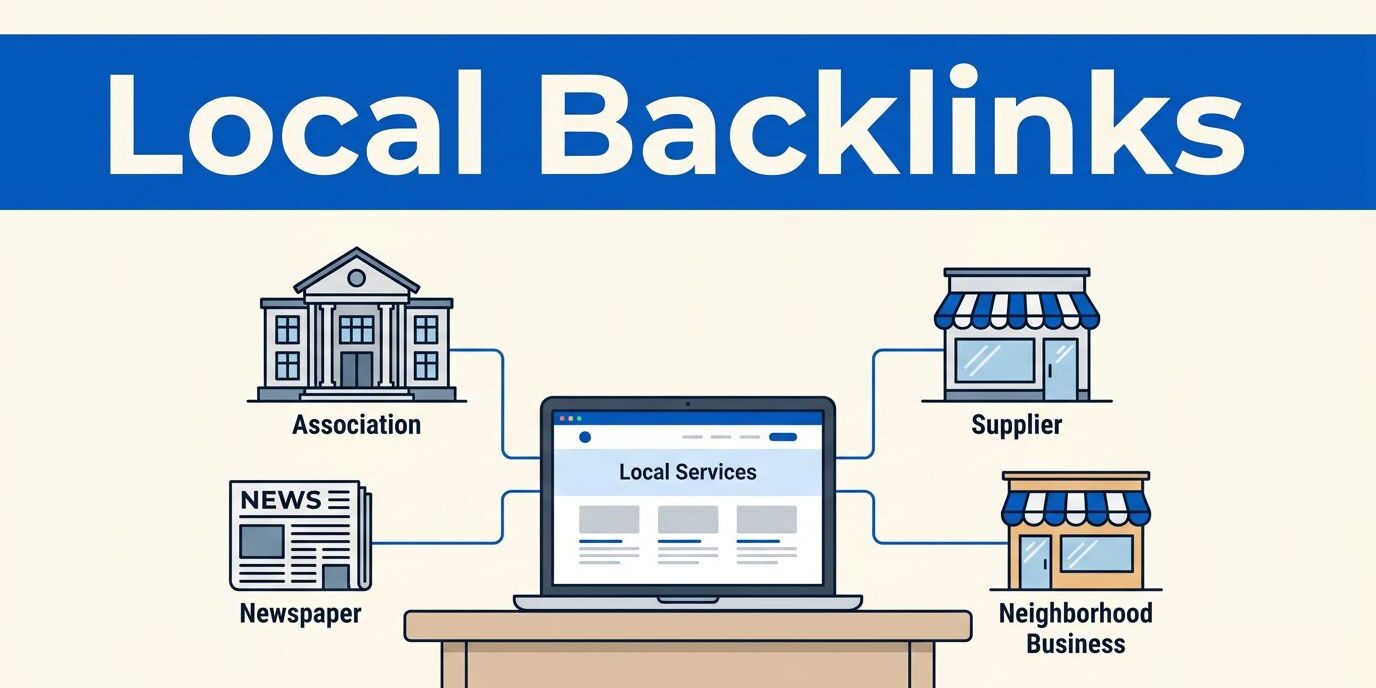
Local backlinks are links from nearby organizations, publications, suppliers, associations, and community websites to your site. By earning these mentions, you build the local authority necessary to rank higher in search results. I focus on earning these links through real relationships and useful local content, not through mass outreach or paid link packages. The strongest links usually come from work your business already does in the community.
Key Takeaways
- Earning local backlinks connects your business with trusted community organizations and helps reinforce your geographic relevance in search results.
- Before reaching out, prepare your website with accurate business information and useful service pages to ensure you have a site worth linking to.
- Build authority by earning links through the local Chamber of Commerce, product suppliers, community groups, event sponsorships, local media, and professional partners.
- Develop helpful local resources that journalists, community organizations, and potential customers will naturally want to reference.
- Focus on tracking the metrics that move the needle, such as referring domains, referral traffic, search engine rankings, and qualified leads, rather than simply counting the total number of links.
Why Local Backlinks Matter for Service Businesses
A backlink is a link from another website to yours. A local backlink adds geographic context because the referring website has a connection to your city, county, neighborhood, or service area.
For example, a link from a local chamber of commerce, neighborhood association, community newspaper, or regional supplier helps search engines confirm your service area, which is vital for appearing in the Local Pack. A link from a completely unrelated website may bring visitors, but it usually provides less local context.
I treat backlinks as part of a larger local SEO system. Your website, Google Business Profile, business citations, reviews, and community relationships should all describe the same company and service area. If your website lists Fort Myers while directories show an old address in another city, new links won’t fix the confusion.
Local backlinks can help in several practical ways:
- They introduce your business to people who already live in or serve your area.
- They give search engines another way to discover and interpret your website.
- They can send referral traffic from organizations your customers already trust.
- They support the E-E-A-T of your service pages, project galleries, and local guides by signaling industry expertise and community trust.
- They create relationships that may lead to referrals, interviews, and future coverage.
A backlink doesn’t guarantee higher rankings. Relevance, content quality, technical performance, reviews, and business information still matter. I also review community discussions, such as this local business backlink discussion, because small businesses often share practical approaches that differ from large-company SEO tactics.
The goal isn’t to collect the largest possible number of links. I would rather earn five links from organizations connected to my market than receive dozens from unrelated websites.
Prepare Your Website Before Asking for Links
Outreach works better when the destination page gives people a clear reason to visit. Before I contact a local organization, I check the website that will receive the link.
A service business should have a useful page for each major service. A page about residential electrical work should explain the work, service area, common customer concerns, process, and next step. A generic homepage may be acceptable for a chamber directory, but a focused service page often gives partners a better resource to reference.
I also check the following details:
- NAP consistency is maintained across the site, ensuring the business name, address, phone number, and service area are accurate and up to date.
- Each important service has a dedicated, indexable page.
- The site works properly on phones.
- Contact forms, phone links, and quote requests function correctly.
- Project photos include useful descriptions instead of empty image fields.
- Pages load without unnecessary pop-ups or broken scripts.
- The company explains who it serves and where it works.
- The website shows proof, such as reviews, licenses, project examples, or associations.
A local organization will hesitate to link to a page that looks unfinished. Visitors will also leave if they cannot understand what you do within a few seconds.
I often connect link building with web design and organic local SEO services because the link only helps if the receiving page can turn attention into a call or form submission. A technically weak website can waste referral traffic that took time to earn.
Your website also needs a clear page to promote. That might be a service page, a local project, a homeowner guide, a community resource, or a short case study. Give potential linking partners something more useful than a request to link to your homepage.
Earn Links Through Real Local Relationships
The most reliable local backlinks usually come from relationships that already exist. I start by reviewing the company’s current network before searching for strangers to contact.
Join organizations that customers recognize
A local Chamber of Commerce, trade groups, merchant associations, and professional organizations often maintain member directories. These pages may include a link to each member’s website.
A directory link alone won’t transform your rankings, but it can provide a relevant citation, referral traffic, and a credible association with your market. I make sure the profile includes an accurate description, service area, phone number, and the most relevant website page.
Membership should be based on genuine business value. Joining dozens of groups only to obtain links can produce unnecessary costs and weak profiles. Choose organizations where you can attend events, meet referral partners, or contribute useful knowledge.
Ask suppliers and partners about website features
Many service businesses work with manufacturers, distributors, subcontractors, property managers, real estate professionals, and complementary contractors. These companies sometimes publish installer directories, preferred-provider pages, project stories, or partner profiles.
In some cases, you may also find opportunities to collaborate with local influencers who are respected in your community. Whether working with a trade partner or a local influencer, I don’t ask for a random link. I suggest a specific reason for the page. A supplier might publish a completed project that shows its product in use. A real estate office might reference a trusted home service provider in its homeowner resources. A property manager might list contractors who serve its buildings.
A short message can be direct:
We recently completed the [project type] using [product or service]. If you publish project examples or local vendor resources, I’d be glad to provide photos, details, and a short description for your website.
The request offers useful material instead of asking someone else to create all the content.
Support community projects with clear expectations
Local nonprofits, schools, sports programs, cultural groups, and neighborhood events often recognize sponsors on their websites. Strategic sponsorships can be a good choice when you support the organization whether or not it provides a link.
Before paying, I review the sponsorship details. I ask where the business name will appear, whether the website links to sponsors, how long the page remains active, and whether the organization identifies sponsored relationships clearly. I also confirm that the audience matches my service area.
Don’t treat a donation as a disguised link purchase. Support a cause because it fits your values and customer base. The link is one part of the relationship, not the entire reason for participating.
Turn completed work into local stories
A finished project can interest local news outlets when it has a community angle. A large restoration, historic property improvement, unusual construction challenge, nonprofit renovation, or public-facing project may offer a useful story.
I prepare a short summary with the location, problem, solution, project impact, customer permission, and original photos. I avoid exaggeration and protect private information. If a journalist uses the story, the company may receive a direct website link or valuable brand mentions that help build authority.
Local press coverage isn’t guaranteed, but useful facts make a stronger pitch than a company announcement that only praises the business.
Create Local Resources Other Websites Want to Reference
Outreach becomes much easier when your website contains high-quality information that others want to cite. As part of a sustainable link building strategy, service companies should leverage the practical knowledge they already possess, as this is exactly what local customers, journalists, property managers, and community groups need.
I look for questions that are specific to the service area. Examples include:
- A hurricane preparation guide for local homeowners
- A checklist for preparing a Southwest Florida property for sale
- A guide to common drainage issues in a particular neighborhood
- A breakdown of questions to ask before hiring a contractor
- A local business opening and maintenance checklist
- A project gallery showing solutions for regional building conditions that emphasize geographic relevance
- A seasonal maintenance calendar for homes or commercial properties
The resource should contain real expertise. A generic article with a city name inserted into every paragraph will not attract strong links. Include original photographs, clear explanations, local regulations when you can verify them, and details from work your company has completed.
I also recommend creating pages that help people make decisions, rather than pages written only to target a search phrase. A homeowner guide can explain when a repair is urgent, what information a contractor needs before quoting, and which warning signs require professional evaluation.
A good local resource may earn links without direct outreach. Still, I usually send it to organizations that would find it useful. A neighborhood group might reference a preparation guide. A property manager could share a maintenance checklist. A local journalist might use a data point or expert explanation.
The content must remain accurate after publication. Outdated hours, service areas, phone numbers, or regulations can damage trust. I review local resources at least once a year and update them when conditions change.
Build a Focused Outreach Process
A strong outreach list is small, relevant, and researched. I do not send the same message to every chamber, newspaper, nonprofit, and business in town. To build an effective list, I often start with a competitor backlink analysis to see where similar businesses are gaining authority.
I identify websites with a real connection to the company by searching for:
- Local chambers and business associations
- Neighborhood and homeowners associations
- Regional nonprofits and event organizers
- Suppliers and manufacturers
- Complementary service businesses
- Niche directories relevant to the trade
- Local newspapers, radio stations, and magazines
- Colleges, workforce programs, and trade schools
- Professional groups connected to the industry
Next, I review each website. I look for existing resource pages, member profiles, sponsor pages, project stories, contributor guidelines, and contact information. I record the organization name, contact person, reason for relevance, possible page to promote, and date of each message.
Then, I write a short, personal email. I mention the organization by name, explain the connection, and provide one useful asset. Within this framework, I often explore digital PR opportunities or pitch a guest posting idea that provides genuine value to their audience. I avoid sending a long SEO explanation.
A simple outreach structure looks like this:
- Introduce the business and explain the local connection.
- Mention a specific page, project, event, or resource on the recipient website.
- Offer a relevant guide, photograph, expert quote, or project detail.
- Ask whether the material would fit an existing page.
- Include the exact website page and contact information.
I send one follow-up after several business days. If there is no response, I move on. Repeated messages can damage a relationship and rarely improve the result.
Community discussions about service-business link building often raise the same concern: owners want useful links without paying for questionable packages. This service business SEO discussion reflects that problem. I prefer a slower process based on partnerships, useful content, and earned coverage.
Video can also help me find outreach ideas. A local SEO backlink guide local SEO backlink guide covers tactics such as local citations, guest contributions, and press opportunities. I still evaluate every opportunity against the business location, audience, and reputation to ensure it aligns with our broader local SEO strategy.
Evaluate Link Quality Before You Pursue It
Not every link deserves your time. When building a strategy for your website, you should prioritize high-quality domains that offer genuine relevance to your area. I evaluate a potential referring website by asking a few basic questions.
Is the site connected to the community? A local organization, publication, association, or business partner has a clearer relationship to your service area than a general website with no local audience.
Would customers trust the site? A website that people use for events, news, professional information, or community services can send valuable referral visitors.
Does the page have a real purpose? A useful member directory, sponsor page, resource article, or project story is stronger than a page created only to hold links.
Is the page accessible and maintained? Broken websites, abandoned directories, and pages packed with unrelated businesses deserve little attention.
Does the link point to the right page? A guide about storm preparation should link to a relevant service or resource, not necessarily the homepage. The destination should match the reader’s expectation.
I avoid private blog networks, automated directory submissions, bulk guest-post offers, and promises of hundreds of backlinks. I also avoid forcing exact-match anchor text into every link. Natural wording such as the company name, service name, or “local roofing contractor” is usually more appropriate than repeating one carefully engineered phrase, as this helps maintain a balanced profile.
A sponsored placement can have marketing value, but I don’t confuse advertising with editorial endorsement. I ask for clear labeling and consider whether the audience, exposure, and referral traffic justify the cost.
Google Business Profile listings and structured local citations still matter for your online visibility, but they are different from earned editorial backlinks. While these directory listings help people find your basic information, unstructured citations, such as a local project story or association profile, provide a different kind of context that helps search engines understand your authority. I keep both accurate and consistent to ensure the best results.
Track Referrals, Rankings, and Leads
I measure link building with more than a backlink count. A link can look impressive in a report and produce no business. Another link from a small community website may send a few highly qualified visitors.
I record new referring domains in a spreadsheet or SEO platform. For each link, I note the source website, linked page, date acquired, relationship, referral traffic, and any resulting inquiry. Google Analytics can show referral sessions, while Google Search Console can help me monitor search performance and landing pages.
I also track:
- Calls and form submissions from linked pages
- Local rankings for important service terms
- Branded searches and direct visits
- Referral visitors who view more than one page
- Links that disappear or point to outdated pages
- New relationships created through the outreach
Results can take time. Search engines may need to discover and reassess a new page, while referral traffic depends on how often people visit the source website. I review the link profile quarterly and check important partner pages after website redesigns or business changes.
When a link points to an old phone number, closed location, or deleted service page, I contact the referring organization with the correct destination. That small maintenance step protects both the visitor experience and the relationship.
For businesses that want a broader search plan, I review sustainable SEO marketing services alongside local link opportunities. Backlinks work best when the website, content, technical setup, and local SEO information all support the same goals.
Frequently Asked Questions
Are paid links a good way to improve my local SEO?
No, buying links through paid packages is generally discouraged and can violate search engine guidelines. Instead, focus on authentic sponsorships or partnerships where the primary goal is community support or business networking rather than just obtaining a backlink.
How long does it take for local backlinks to impact rankings?
SEO results typically take time, as search engines need to discover and re-index the pages that link to your site. You might see referral traffic sooner, but improvements in search rankings often depend on the quality of the link and the overall authority of your website content.
Do I need a high volume of links to compete locally?
Not necessarily; local SEO favors relevance over quantity. Earning a few high-quality links from trusted community organizations or industry partners is much more valuable than having a large number of links from irrelevant or low-quality websites.
What should I do if a local organization links to an outdated page?
It is important to maintain your links for the best user experience. Reach out to the website owner or administrator politely, provide the new, correct URL, and explain that the update will better serve their visitors by directing them to the most relevant information.
Conclusion
The best local backlinks come from work your business already has a reason to do. Join relevant organizations, support community projects, share useful expertise, build relationships with partners, and create resources that local websites can reference.
I focus on relevance and trust before volume. A small group of genuine local connections can bring better referral visitors, stronger community recognition, and more useful search context than a large collection of unrelated links. By prioritizing these relationships, you build the local authority necessary to move the needle in your market. This intentional approach is the foundation of a successful local SEO strategy, helping you grow your footprint in the communities you serve. When your website gives those visitors a clear next step, you can Contact Us to discuss your website and SEO needs.