

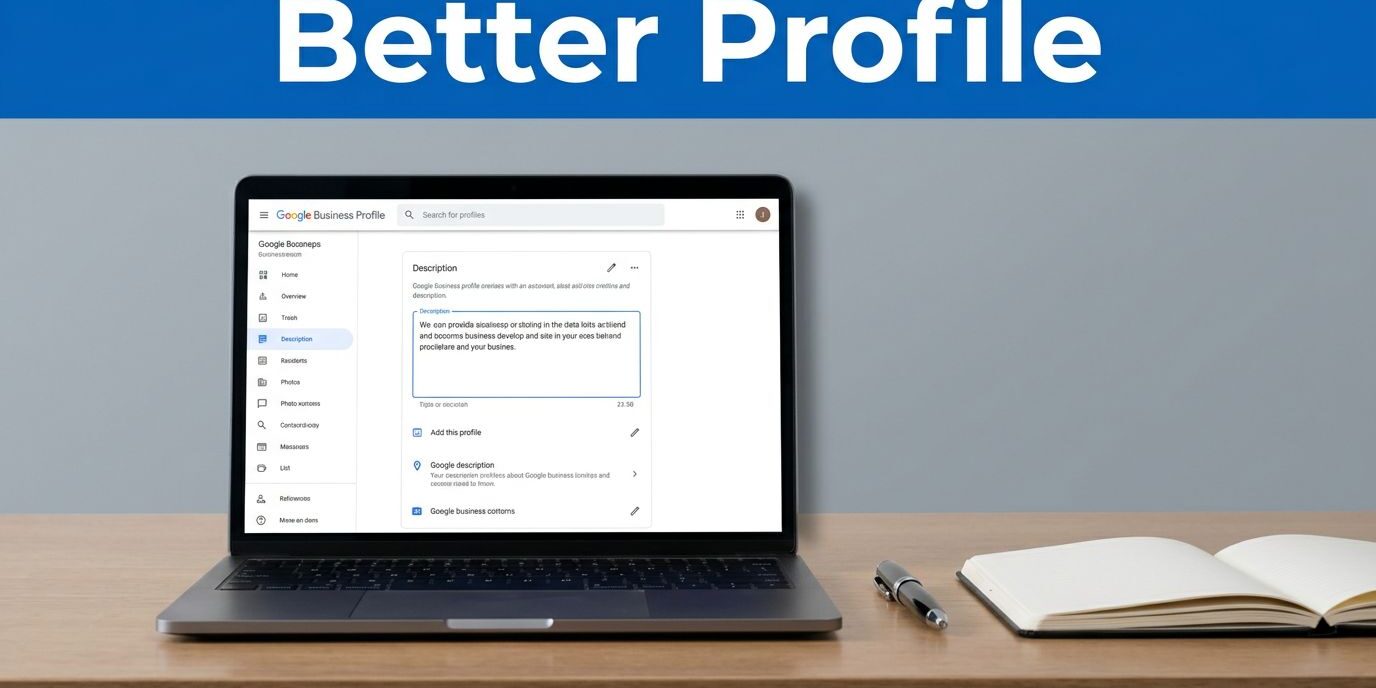
A weak business description can make a good company look forgettable. When I read most profiles, I can tell the owner wrote them in a hurry, and that rushed feeling shows.
Your Google Business Profile description is short, but it does real work. Beyond simply explaining your services, it serves as a foundational element of local SEO, helping you rank better in your community. This snippet helps a stranger decide, in seconds, whether your business sounds clear, trustworthy, and worth a call. By speaking directly to your audience, you can improve brand awareness right from the start.
When I write one, I treat it like a front-door sign. It should tell people what the business does, who it helps, and why that matters. Remember that this text appears prominently in the Google knowledge panel, giving you a powerful opportunity to make an immediate impact on potential customers.
Key Takeaways
- Prioritize Clarity over Keywords: Your description should clearly state what you do and who you serve in the first sentence; avoid “keyword stuffing” which sounds robotic and unprofessional to potential customers.
- Keep it Concise: While Google allows 750 characters, 300 to 500 characters is usually ideal, ensuring the most important information is visible to the user before they need to click “more.”
- Avoid Promotional Fluff: Steer clear of sales-heavy language like “best,” “leading,” or “number one,” and remove prohibited content such as URLs, coupon codes, and all-caps text.
- Ensure Consistency: Your profile description should align with the information on your website to build trust with both Google and your potential customers.
What a strong business profile description needs to do
I do not treat the description as a place to cram in every service. I use it to answer the customer’s first silent question: “Am I in the right place?”
That means I start with the core offer. If the business is a local roofer, I say that first. If it is a family law firm, I say that first. Vague lines like “We provide quality solutions for all your needs” do not help anyone, because they could belong to almost any business. To succeed, you should clearly define your primary business category within the opening sentence.
A strong description also sounds grounded in real life. I want the wording to reflect what the company truly sells, where it works, and who it serves. That simple clarity matters more than fancy phrasing.
Google provides a 750-character limit for your business description, but I rarely try to fill every inch. In most cases, 300 to 500 characters is enough. The first 250 characters are the most critical because they are the only portion visible before a user has to click to see more. Shorter copy often reads better, and people scanning local search results do not want a speech.
I also keep expectations realistic. A better description improves your local visibility, but it will not carry the whole local search job by itself. Google still looks at the full profile, including categories, hours, reviews, photos, and service details. Google’s own business representation guidelines make that plain.
The profile also works better when the website backs it up. If the profile says one thing and the site says another, trust drops fast. That is why I like matching the language on the profile with the site and choosing the right landing page for each click, especially when a business already has integrated web design and organic SEO services.
Above all, I write for the target audience who has never heard of the business before. If that person can read the description and instantly understand the offer, the copy is doing its job.
A simple formula I use to write it fast
When I need to draft a description without overthinking it, I follow a simple order. It keeps the writing tight and makes editing easier.
- I start with what the business does.
- Next, I add who it serves and include specific geographic markers to show where.
- Then, I name the core offerings.
- After that, I include one real unique selling point.
- Finally, I trim anything that sounds generic or puffed up.
That order works because readers process basic facts first. They want the headline version before the details.
For example, I would not write: “We are a trusted, customer-focused company committed to excellent service and satisfaction.” That line says almost nothing. I would write: “At [Business Name], we provide residential plumbing repair and water heater service for homeowners across Tampa, with same-day appointments and clear estimates.”
Here is a quick side-by-side look at the difference:
| Weak wording | Better wording |
|---|---|
| We offer quality service | We repair garage doors for homeowners in Orlando |
| Best company in town | Family-owned HVAC service with after-hours emergency calls |
| Full-service solutions for all needs | We handle bookkeeping and payroll for small businesses |
| Trusted professionals | Licensed electricians for panel upgrades, rewiring, and repairs |
The stronger examples aren’t flashy, but they do something better. They help the customer picture the business in plain terms. Whether you operate as a storefront with a physical location or as a mobile service-area business, clarity is key.
I want the description to read like a clear answer, not a sales pitch.
If I need a starting template, I use this sentence shape: “We help [customer type] in [location] with [main service]. We also provide [supporting service or product]. Customers choose us for our unique value proposition, which is [differentiator].”
That structure works for most small businesses because it covers the big points without sounding robotic. I still rewrite it to fit the brand voice, but the bones stay the same.
What I leave out, every single time
Some business owners try to turn the description into an ad. I avoid this approach because Google has strict character limits, and readers are quick to tune out marketing hype.
The safest rule is simple: keep it useful, honest, and focused on the business. You should always consult Google’s list of prohibited content to ensure your description remains compliant. Specifically, I exclude website URLs, discount language, coupon talk, and lines written in all caps, as local SEO experts generally agree that this promotional gibberish harms your professional image. Additionally, since your location is already provided in the primary business fields, there is no need to repeat your storefront address in the description.
I also cut keyword stuffing. If a sentence reads like it was built for a machine, people will notice it right away. A line such as “Miami dentist, family dentist Miami, emergency dentist Miami, cosmetic dentist Miami” sounds clumsy and desperate. One natural sentence beats a stack of repeated terms every time.
The same goes for empty bragging. Words like “best,” “leading,” and “number one” do not help unless the claim is easy to prove. Most of the time, I replace them with facts. Years in business, same-day service, bilingual staff, weekend appointments, or a narrow specialty say much more to potential customers.
I have also seen owners use the description to list every town in a 50-mile radius. That rarely reads well. If your service area matters, I mention the main city or region once and move on.
This is not only theory. In a local SEO discussion on Reddit, many profile owners echoed the same pattern: natural, descriptive wording tends to work better than stuffed copy when trying to rank better on Google Maps.
A good self-check is this: could I say this sentence face-to-face to a customer without cringing? If the answer is no, I rewrite it. That one test removes a lot of bad profile copy and helps ensure your business profile remains professional and effective.
How I polish the final version before I publish it
My first draft is never the final one. I always read the description out loud, because awkward phrasing shows up fast when I hear it. Once I am ready to finalize my changes, I head to my dashboard, click the edit profile button, and prepare to update the text.
I look for three things during that edit. First, I check clarity. The business type should appear in the first few words. Second, I check specificity. Readers should know who the business serves and what it offers. Third, I check tone. The copy should sound human, not stiff.
Then I compare the description to the rest of the profile. If the profile says commercial cleaning but the website mostly talks about house cleaning, I fix that mismatch. This process is part of entity optimization, which helps ensure Google recognizes your business as a consistent entity across the web. By aligning your business information, you leverage semantic search to help Google understand how your services relate to user intent. I also ensure the website uses structured data to provide clear signals to search engines, which works as a perfect complement to your Google business profile description.
For businesses that want broader local visibility, expert search engine optimization services can support the profile instead of leaving it to work alone.
Here is the short checklist I use before I hit save:
- The first sentence says what the business does.
- The location or service area is clear.
- The main services are present, but not stuffed in.
- The wording sounds natural when read aloud.
- Every claim is true and easy to back up.
- There is a clear but natural call to action included.
If I still feel unsure, I cut ten more words. Most profile descriptions improve when they lose fluff.
And if you want a second set of eyes on the wording, your local SEO, or the website behind the profile, you can Contact Us for a free consultation.
Frequently Asked Questions
How many characters should I use for my description?
Google provides a 750-character limit, but you do not need to fill all of it. Aiming for 300 to 500 characters is usually best, as it keeps your message clear and ensures the most vital information is visible to users immediately.
Should I include keywords to rank better on Google Maps?
While it is helpful to mention your primary business category, you should avoid stuffing keywords into your description. Natural, human-readable sentences perform better than lists of repeated terms, which can actually harm your professional image.
Is it okay to list my address or phone number in the description?
No, you should not include your address or phone number in the description field. That information is already provided in your profile’s primary business fields, and repeating it is unnecessary and against the grain of a clean, professional profile.
Can I include sales offers or promotional language?
It is best to avoid discount language, coupon talk, and excessive promotional hype. Google has strict guidelines regarding prohibited content, and users are more likely to trust a professional, honest summary of your services than a sales-heavy advertisement.
Final thoughts
A better Google Business Profile description does not need clever tricks. It needs clear language, honest details, and a fast answer to what your business does.
When I keep the copy simple, your business name sounds more credible. That clarity is usually what wins the click, the call, or the visit. If your current description feels vague, fix the first sentence first. That small change often does more to improve your search visibility than a full paragraph of filler ever could.
Remember that when a well-crafted description is combined with positive reviews, it serves as powerful social proof for new customers. Focus on these fundamentals, and your profile will be much more effective at converting browsers into clients.