

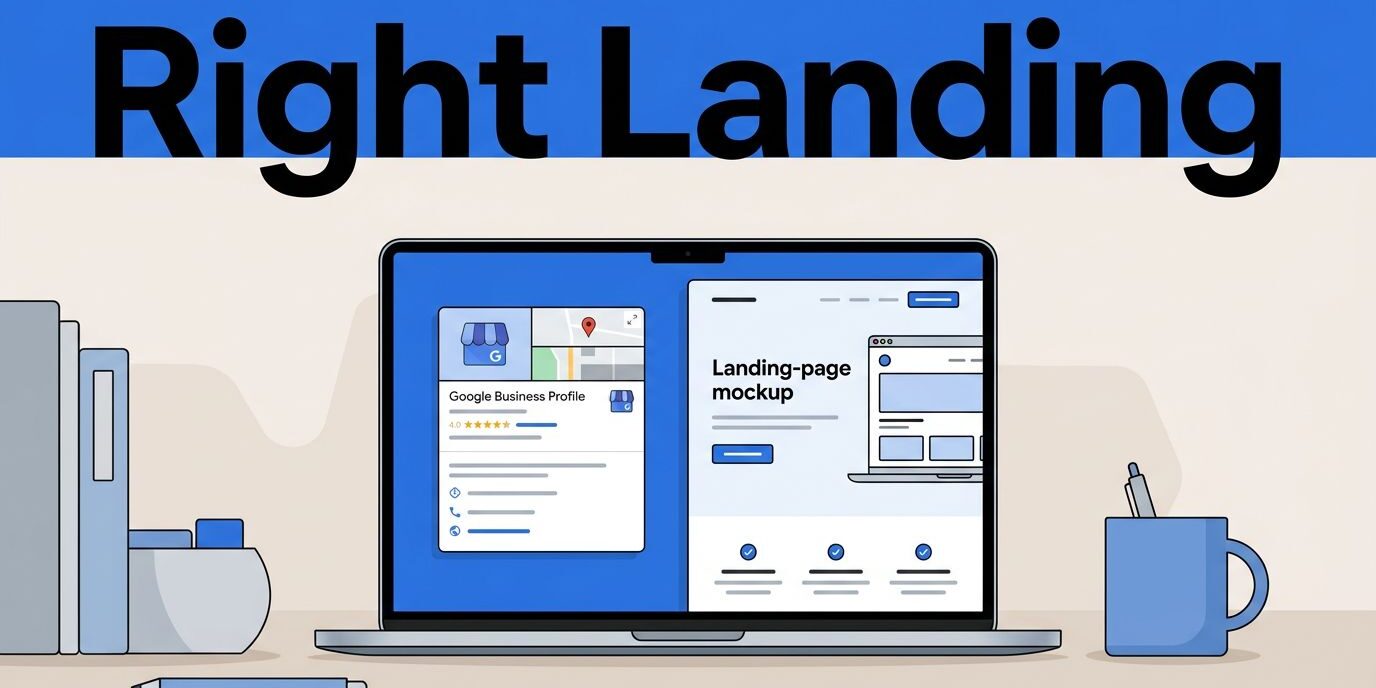
The wrong destination can waste a high-quality click from local search results in seconds. I have seen business owners send Google Business Profile landing page traffic to a homepage that is too broad, too busy, or too vague, then wonder why their conversion rates stay flat.
When I choose a destination for potential customers, I look for one thing first: the page must match the specific promise the profile makes. If someone clicks for service details after appearing in local search results, I do not send them to a generic brand page and hope they keep digging. That choice directly affects trust, phone calls, and the way your website strategy integrates with your overall local SEO.
Key Takeaways
- Prioritize Intent Alignment: The landing page must directly fulfill the promise made by the Google Business Profile, ensuring the destination answers the specific query that drove the click.
- Consistency is Crucial: Maintain strict accuracy across your profile and website, including NAP (name, address, phone) data, business hours, and service categories to build trust and strengthen search authority.
- Match Destination to Goal: Avoid defaulting to the homepage if a specific service page, location page, or contact page more effectively facilitates the primary call to action, such as booking an appointment or requesting a quote.
- Optimize for Mobile: Since the majority of Google Business Profile traffic originates from mobile devices, landing pages must be responsive, fast-loading, and easy to navigate on small screens.
Why the landing page choice matters more than most owners think
I treat the landing page as the next step in the Google Business Profile journey. Most users discover a business through Google Maps, where the profile gains their initial attention, but the landing page is what actually finishes the job. If the page feels unrelated to what they just saw, visitors hesitate. If the page feels aligned with their intent, they keep moving.
Google also compares what it sees across your profile, website, and public listings. This platform, formerly known as Google My Business, relies on clear signals to rank your site. When your business name, address, and phone number drift apart, your NAP consistency suffers, and your signals weaken. Because Google wants consistent proof that the business is real, having a verified profile is essential for your business listing to maintain authority. I always check Google’s own Business Profile page and the guidelines for representing your business when I review this kind of setup.
That same consistency helps people, not just search engines. A visitor who taps a profile listing already has a question in mind. If the landing page answers a different question, the experience feels off. A good page removes that friction fast.
I think of it this way. The profile starts the conversation, and the landing page keeps it going. If the two don’t match, the visitor feels the gap right away.
Start with the action I want the visitor to take
Before I pick a page, I decide on the primary call to action I want the click to drive. Do I want the person to call, request a quote, schedule an online booking, get directions, or learn about one specific service? The answer changes the best page every time.
| Profile goal | Page that usually fits best | When I avoid it |
|---|---|---|
| Phone calls | Contact page or focused location page | When the page buries the phone number |
| Bookings | Appointment or online booking page | When the form is long or distracting |
| Directions | Location page | When there is no address or map support |
| One service inquiry | Service page | When the page covers too many topics |
| Broad brand trust | Homepage | When the homepage is not built for local traffic |
I do not force every click to land on the homepage. That works only when the homepage is already built like one of those effective local landing pages. In many cases, a service page or a page optimized for Google Maps does a better job because it speaks directly to the searcher’s intent.
A landing page should answer the next question before the visitor has to hunt for it.
I also pay attention to how the profile itself is written. If the category says home theater design, I do not send people to a page about every service the company offers. If the profile points to one specific service area, I want the landing page to feel local and relevant. The closer the match between the content and the user intent, the easier the next step becomes.
When I am unsure, I look at the main action behind the profile. A business that wants calls needs a different page than one that wants foot traffic. Whether I am analyzing Google posts or general profile information, a business with a wide service area needs a different page than a single storefront. That sounds simple, but many local websites skip this step.
What I check before I send traffic there

I always inspect the page itself before I connect it to my Google profile. The first screen has to do real work. It should show the business name, the main offer, and the next step within a few seconds.
I also check for consistency. If the profile uses one phone number and the page uses another, I fix that first. If the business hours on the page differ from the profile, I fix that too. Those small mismatches can create larger trust problems later. The same goes for service areas, category language, and business descriptions.
Mobile layout matters just as much. Most profile clicks come from phones, so I want buttons easy to tap and text easy to scan. If the page feels cramped on mobile, I revise it before I point the profile at it. That is why I often recommend responsive website design services when the landing page needs to convert local traffic.
I also look for these basics:
- A clear headline that matches the profile.
- One strong call to action above the fold.
- Fast load time for a mobile friendly experience.
- Trust signals like customer reviews, service details, or project examples.
- Consistent business hours.
- A page structure that stays focused on one job.
If the business runs on WordPress, I keep these WordPress SEO tips in mind when I organize the page. Beyond clean headings and useful copy, I ensure that title tags and meta descriptions are optimized for the local searcher. I also verify that schema markup is correctly implemented to help search engines index the content, and I monitor Google Analytics to see how visitors interact with the page. A clear path to contact usually matters more than fancy design.
I use web design and organic SEO services when the page needs both better structure and better search visibility. A good local page should help Google understand the business, provide social proof through customer reviews, and make the visitor feel ready to act.
When I choose something other than the homepage
The homepage is often the default choice, but it is not always the right one. I use a different page when the homepage tries to do too much. If the site serves several industries, the homepage may be too broad for local traffic. A tighter page usually performs better.
For single-location businesses, I often prefer a page built around the local office to maximize geographic relevance. That page can include the address, phone number, service area, map, and local proof, which helps strengthen your location signals for better visibility in the map pack. For service-based businesses, I like a page that focuses on the exact service tied to the profile. A roofer should not send a roof repair click to a page about every type of exterior work if a dedicated service page exists.
I also look at the structure of the site as a whole. If the business has separate services, separate service areas, or multiple brands, the landing page should reflect that split. A high-quality landing page experience is crucial, especially if you are running a performance max campaign, as it ensures your traffic lands on content that directly matches the user intent.
If the business needs a new page instead of a better link, I treat that as a site problem, not a traffic problem. For businesses that need a quick web presence, I often recommend building out dedicated local landing pages or even utilizing Google sites if their main infrastructure is too complex to update quickly. A weak landing page often points to a deeper issue in the website architecture. That is where ongoing updates help, because a site that stays current gives Google a clearer picture of the business over time.
When I need a second set of eyes on the setup, I usually tell owners to Contact Us for a free consultation. It is easier to fix the page choice before a campaign starts than after months of wasted clicks.
I also remind owners to watch for changes outside the website. Old directory listings, stale social profiles, or old contact data can fight against the landing page. If the profile and page look right but the rest of the web still tells an old story, the result can still feel inconsistent.
Frequently Asked Questions
Should I always send traffic to my homepage?
No, the homepage is often too broad for local search intent. It is usually better to link to a specific service or location-based page that directly addresses what the user was searching for when they found your profile.
How does NAP consistency affect my profile?
Google uses consistent business name, address, and phone number (NAP) data across your website and listings to verify your authority. Mismatched information creates confusion for both search engines and potential customers, which can hurt your rankings.
What should be visible “above the fold” on a landing page?
Your landing page needs a clear, relevant headline, a prominent call to action, and essential contact details immediately visible upon loading. This ensures visitors know they are in the right place and can take the next step without scrolling or searching.
Why does mobile optimization matter for local search?
Most clicks from Google Business Profiles occur on smartphones, meaning mobile-first design is essential for conversion. If a page is cramped or difficult to use on a phone, visitors will likely bounce, wasting the high-quality traffic you just earned.
Conclusion
Choosing the right landing page is a vital component of your overall digital marketing strategy. The best page is the one that aligns with your profile, addresses the searcher’s intent, and makes the next step obvious. When these elements are in sync, the click feels natural rather than forced, ultimately improving your conversion rate.
I prioritize the page that builds trust fastest, mirroring the social proof found in your customer reviews. Sometimes that is the homepage, but just as often it is a dedicated location page, service page, or contact page designed for one clear job. By directing traffic to a high-quality destination, you support your search ranking while ensuring a seamless user experience.
That is the standard I use every time a Google Business Profile begins sending traffic. Whether you are aiming to boost your conversion rate or maintain a strong search ranking, the destination page should remove doubt, not create it.