

Most small business owners do not ask whether a local SEO timeline is effective. Instead, they ask how long it takes before their investment starts bringing in more calls, visits, and leads as they work toward better local search rankings.
I understand that perspective. If I am putting time and money into my website, Google My Business profile, and customer reviews, I want a realistic answer. Local SEO is not instant, but it also is not a mystery once I know what factors affect the pace of the results.
Key Takeaways
- Local SEO is a gradual process; while initial progress often appears within 1 to 3 months, most businesses see meaningful traction between 3 and 6 months.
- Your starting point matters; businesses with clean websites and accurate directory information generally experience faster growth than those requiring technical repairs.
- Market competition and geographic density dictate the pace of results, with hyper-local strategies often yielding better outcomes than broad, city-wide efforts.
- Success shows up in early engagement metrics—such as profile views, calls, and search impressions—well before major ranking jumps occur.
- Avoiding shortcuts like fake reviews or spammy backlinks is essential, as these can trigger penalties that set back your progress significantly.
A realistic local SEO timeline for a small business
When I talk about local SEO with business owners, I usually start with one point: there is no single clock. A plumber in a small town can move faster than a personal injury lawyer in a crowded city, as the level of competition dictates the pace of progress. A business with an old, messy website usually takes longer than one with a clean site and a strong profile.
Still, there is a pattern. For most small businesses, I expect early movement in 1 to 3 months, noticeable traction in 3 to 6 months, and stronger gains in 6 to 12 months. That is the broad range I keep in mind.
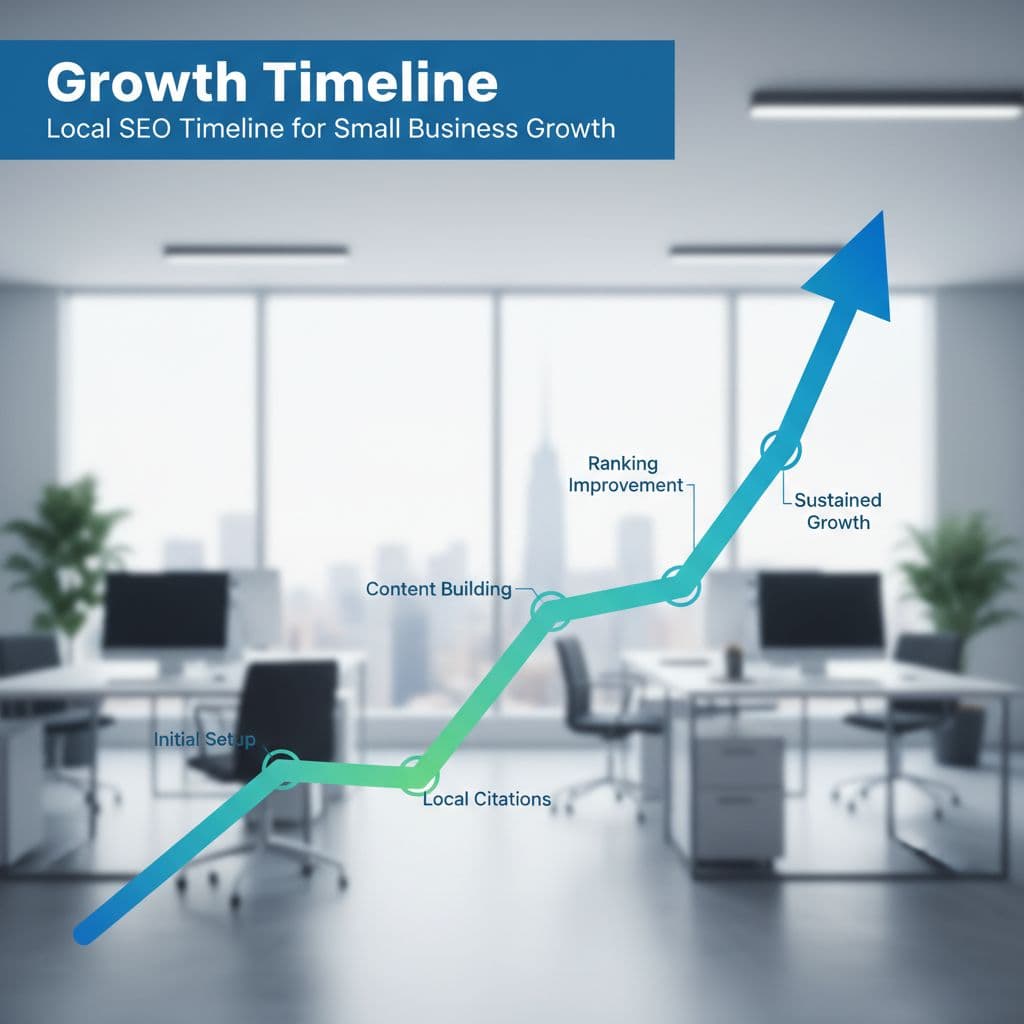
This simple timeline shows what I usually expect to happen at each stage:
| Time frame | What I usually see | What it means |
|---|---|---|
| Month 1 | Technical SEO, fixing citations, and keyword research | The initial phase builds a strong foundation |
| Months 2 to 3 | More Google Business Profile views, impressions, and ranking movement | Google is starting to trust the updates |
| Months 3 to 6 | Better map pack visibility, more calls, and more website clicks | The work is turning into traffic |
| Months 6 to 12 | Stronger local search rankings, steadier lead flow, and wider keyword reach | Momentum is building |
That does not mean every business climbs on the same schedule. Some see faster map pack gains, while others spend the first few months fixing old problems.
I also separate local SEO from pure rankings. If I only stare at whether I am number one yet, I miss the signs that matter. More discovery searches, more direction requests, and more profile actions often show up first. That is why it helps to understand what organic SEO is and how it supports local visibility over time.
What speeds up local SEO, and what slows it down
The biggest factor is my starting point. If my website health is poor, the site is thin, slow, or missing clear service pages, the timeline stretches out. If my Google Business Profile (formerly known as Google My Business) has the wrong hours, weak categories, or old photos, that adds more drag. In contrast, a business with solid technical foundations can move much faster.
Competition matters too. In a smaller market, I might only need better feedback, cleaner listings, and stronger pages to stand out. In a dense metro area, the competition is higher, as several businesses may already have years of traction, strong backlinks, and well-built websites. That means the climb takes longer.
Search has also changed. In 2026, search visibility depends even more on E-E-A-T, fresh business info, and content that search engines can read clearly. AI Overviews now play a significant role in how local results are discovered, making it vital to focus on structured information. That aligns with current trends which highlight updated profiles, schema markup, and neighborhood-level relevance.
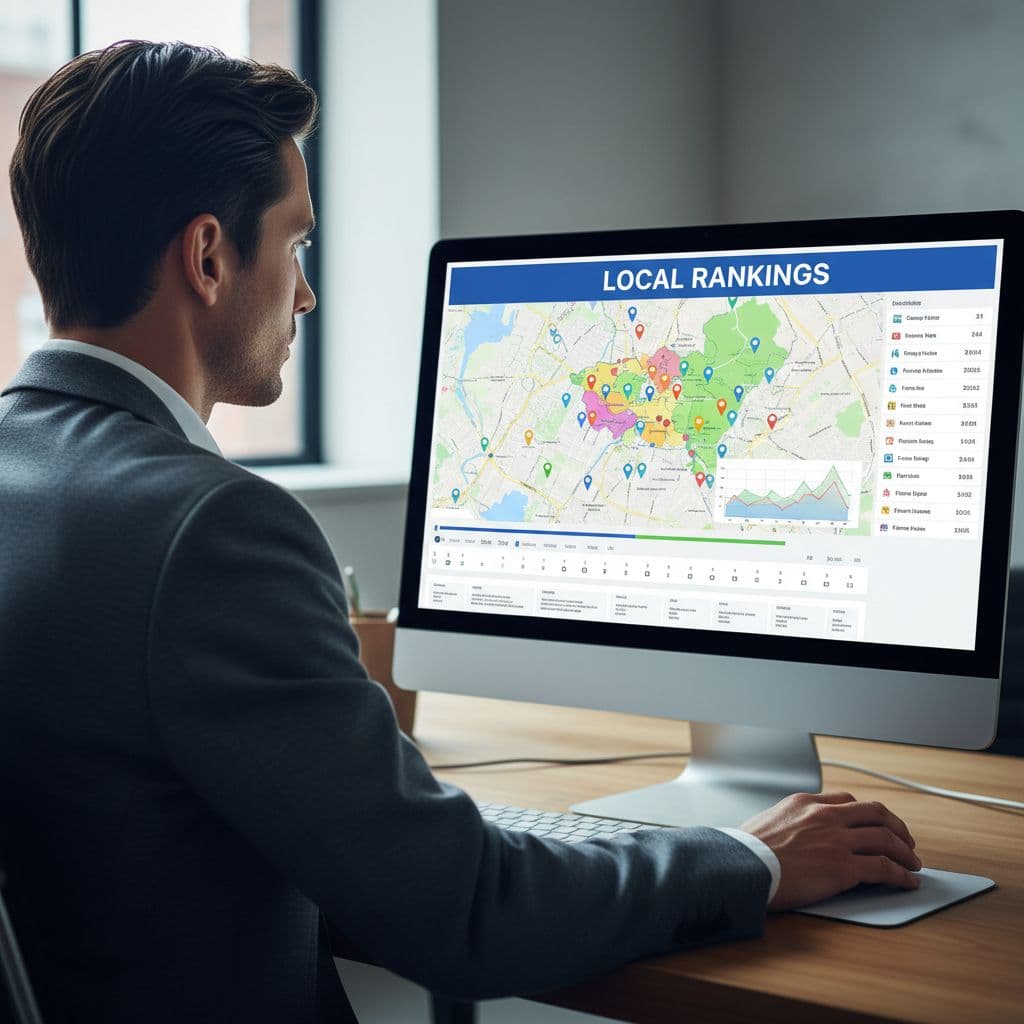
When I size up how long local SEO may take, I look at a few things first:
- Whether NAP consistency is maintained by ensuring the name, address, and phone match across the web.
- Whether the Google Business Profile is complete and active.
- Whether the website has strong local service pages and proper mobile optimization.
- Whether customer reviews are recent, steady, and believable.
- Whether the market is broad, city-wide, or hyper-local.
Hyper-local targeting matters more now. If I try to rank for an entire city with a weak site, progress is slow. If I build clear pages around the exact areas I serve, the timeline usually improves. Google wants to trust that I am relevant in a specific place, not everywhere at once.
Early wins usually show up before rankings do
This is where many business owners get frustrated. They want a clean jump from page three to the top three. That can happen, but it is not the only sign that the work is paying off.
When local SEO starts working, I often notice smaller signals first. By checking Google Search Console, I can see search impressions trending upward. The business profile starts generating more calls, and website clicks rise on service pages. Branded searches increase because more people have seen the name before. These indicators represent real gains in search visibility, even if the primary keyword has not reached the top of the local search results yet.
If I do not see ranking jumps right away, I look for stronger engagement and better customer actions first.
That is also why tracking matters. If I do not measure calls, forms, profile views, and organic traffic, I can mistake a quiet period for a lack of progress. Sometimes the rankings are inching up, but the bigger issue is that the site isn’t converting well once people arrive. Often, the first sign of success is seeing your business appear more frequently in the map pack before your organic positions fully stabilize.
I also pay attention to what other owners report, but I treat it as a reality check rather than gospel. A recent local SEO discussion on Reddit echoes the same pattern I see often: many businesses notice these initial shifts within 3 to 6 months, while crowded markets naturally take longer. That timeframe matches the broad local SEO timeline most small businesses should expect.
How I shorten the wait without trying shortcuts
I cannot force trust, but I can remove delays. That is the smartest way I know to move faster.
The work that helps most is rooted in several foundational activities that must be performed consistently and with high quality:
- I clean up directory listings to ensure business information is accurate everywhere it appears online.
- I fully update the Google Business Profile with services, hours, photos, and the right categories.
- I focus on strategic content creation, adding useful local pages that match what customers are searching for.
- I ask for fresh customer reviews and ensure I reply to them promptly.
- I perform technical on-page optimization, which includes improving page speed, mobile layout, internal links, and basic schema.
None of that is flashy, but it cuts out a lot of wasted time. If a site is slow, difficult to use on a phone, or thin on content, local SEO has to fight an uphill battle. That is why investing in professional SEO-focused web design services can make the timeline shorter. A well-built site gives every other signal, including modern link building efforts, much more weight.

Customer reviews deserve special attention. They help search rankings, but they also significantly improve conversion rates. If two businesses appear side by side in search results, most people pick the one that looks active and trusted. Even when these reviews do not move rankings overnight, they often lift click-through rates and calls sooner than expected.
I also avoid shortcuts. Bought links, fake reviews, and spammy city pages can create a brief bump, but they usually make the timeline worse in the long run. I would much rather build steady, reliable momentum than spend months cleaning up the aftermath of a shortcut.
When the timeline is longer than it should be
Patience matters, but blind patience does not. If I have done real work for four to six months and there is zero movement in impressions, profile activity, calls, or rankings, I stop blaming the calendar and start looking for technical or strategic problems.
A few issues can stall progress fast. Duplicate business listings, wrong categories, weak location pages, poor mobile speed, and inconsistent contact info are common culprits. In some cases, a lack of consistent customer reviews is the primary factor preventing local search rankings from climbing. You might also find that your domain authority is too low to compete, or you have not yet established enough local authority in your specific geographic area.
Some industries also take longer by nature. In sectors like legal, medical, or finance, Google applies stricter E-E-A-T standards, which can make moving the needle in competitive cities a process that takes 6 to 12 months. Still, I want to see some kind of positive trend line well before that point, even if it is modest. Sometimes, the leads are actually coming in, but the reporting is not set up correctly to capture them.
If I needed a second set of eyes on the site, listings, or local strategy, I would Contact Us for a free consultation. Sometimes one audit catches the issue that has been stretching the timeline for months.
Frequently Asked Questions
Why am I not seeing my ranking improve immediately?
Local SEO takes time because search engines need to verify your business information and build trust in your digital presence. Early progress often appears as increased profile actions or website impressions before your actual map pack ranking shifts.
Can I speed up the timeline for better rankings?
You can shorten the wait by ensuring your NAP (name, address, phone) information is consistent across all directories and by keeping your Google Business Profile updated with fresh content. Focusing on local service pages and earning authentic customer reviews will also help you gain visibility faster.
How do I know if my local SEO is actually working?
Look for growth in secondary metrics like phone calls, direction requests, website clicks from your profile, and search impressions in Google Search Console. Even if you aren’t in the top spot, these engagement signals prove that your strategy is connecting with potential customers.
When should I worry about a lack of progress?
If you have actively worked on your local SEO for four to six months without any improvement in impressions, calls, or rankings, there may be an underlying technical issue. Problems like duplicate business listings, poor mobile performance, or incorrect category selection are common obstacles that require an audit to fix.
Conclusion
The phone usually does not ring more simply because you started an SEO campaign. It rings more because you consistently improved the signals that local customers and Google both trust.
For most small businesses, the best answer is simple: expect early signs in a few months, meaningful traction in 3 to 6 months, and stronger results as the work compounds. Improving your local SEO timeline is a marathon rather than a sprint, as building search visibility requires steady effort. By focusing on your performance in local search results, you ensure that your business remains the most current and relevant option in your area. Ultimately, the businesses that win are those that consistently engage with their audience and prioritize fresh customer reviews to build long-term trust.