

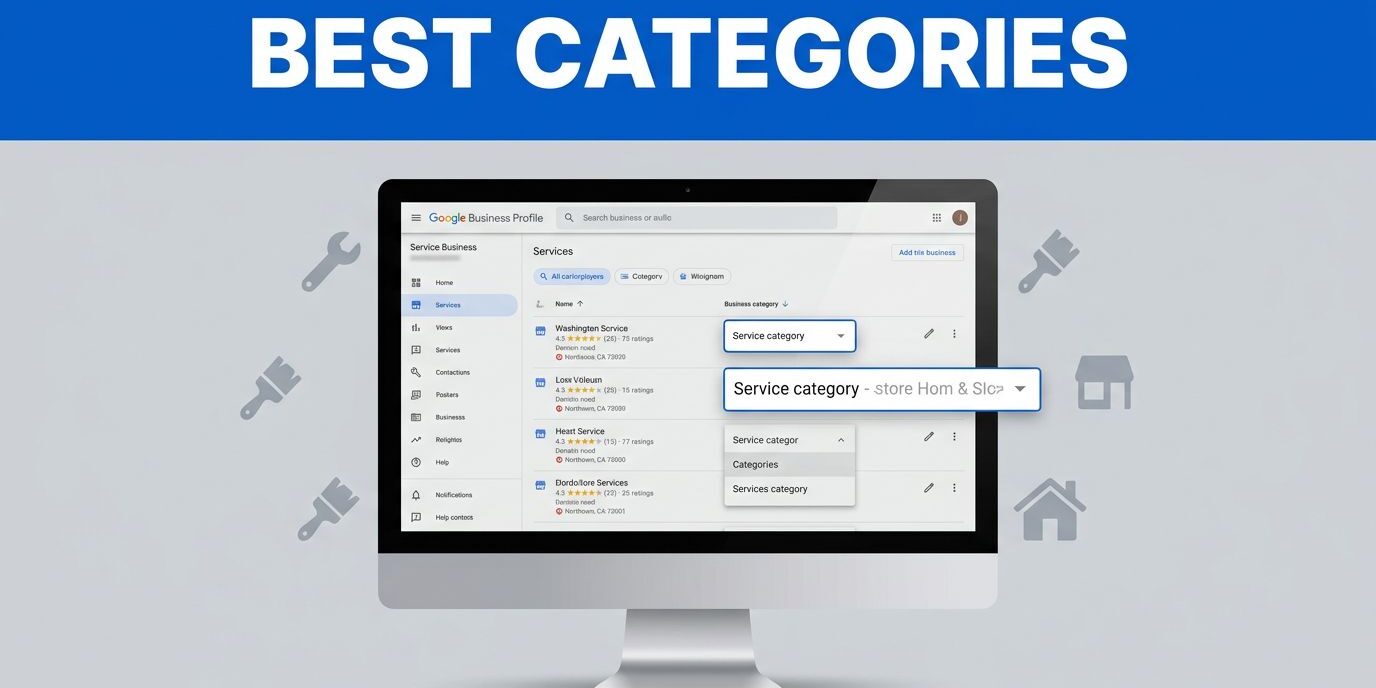
I see this mistake all the time. A service business picks a broad category on Google, then wonders why the wrong people call, or why nobody calls at all.
Your Google Business Profile tells Google what kind of business you are, and that category choice carries more weight than most owners think. When I look at google business categories for service companies, the best choice is rarely the broadest one. It is the clearest one. Selecting the right options is a fundamental part of your local SEO strategy, as it ensures your GMB profile appears for the specific search intent of your target customers.
Key Takeaways
- Specificity Over Breadth: Always choose the most specific Google Business Category that accurately describes your core business rather than broad, generic labels that weaken your relevance signal.
- Prioritize Revenue-Drivers: Select a primary category based on the services that bring in the most steady demand and highest profit margins, rather than what sounds most impressive.
- Strategic Use of Secondary Categories: Use secondary categories sparingly and only for services you consistently perform, ensuring they support your primary offering rather than scattering your profile’s focus.
- Maintain Cross-Platform Consistency: Ensure your business categories align with your website content, service pages, and business description to provide Google with a clear, unified message about what you do.
Why the right category matters so much
Google uses your category to decide which searches match your profile. This choice is a major ranking factor that directly shapes your visibility on Google Maps and the local results that appear above standard organic listings. Specifically, your category selection heavily influences your chances of appearing in the coveted local 3-pack, which is where most customers make their decisions. In 2026, the primary category remains one of the strongest relevance signals for local search.
For service businesses, that signal matters even more. Because customers do not visit your office, Google has fewer in-person clues to work with. It leans heavily on your GMB categories, service area, reviews, and profile details to determine when to show your business to potential clients.
A broad label weakens that message. If I label a plumbing company as a general contractor, Google has to guess what kind of work it really does. That guess can put the business in front of the wrong searches or exclude it from the right ones.
Google provides clear direction in its business category guidance. The advice is straightforward: choose the most specific category that accurately describes your business.
Your primary category should describe your main service, not your full menu.
That last part matters. A category is not a wish list; it is not a place to name every possible job your team can do. It is the clearest label for the business itself. Once that label is accurate, the rest of your profile has a better shot at making sense to Google and to your customers.
How I choose the best primary category
I start with the work that drives the business. What service brings the best leads, the strongest margins, and the most steady demand? That answer usually points to the best primary category faster than anything else. To narrow it down, I consult the official Google business categories list to find the most specific match possible for the core services offered within the service area.
I do not choose based on pride or image. Owners sometimes want a primary category that sounds bigger, broader, or more impressive. That usually backfires. If you repair air conditioners all day, HVAC contractor is a better fit than a vague contractor label. If injury cases pay the bills, personal injury attorney is stronger than law firm when that is the real focus.
I also ask a blunt question: what do I want the phone to ring for next month? The category should support that answer. If a handyman occasionally handles light plumbing, that still does not make plumber the right choice. A category should reflect the core business, not an occasional add-on.
When two options seem close, I compare them against the market. I analyze competitor categories to see what the highest-ranking businesses in the local map results are using. I do not copy them on autopilot, but these patterns usually reveal which labels drive the most relevant traffic.
Then I line that choice up with the website. If the Google profile says one thing but the homepage and service pages say another, the signal gets weaker. That is why professional web design and organic SEO services are vital for local visibility. Integrating proper Schema markup on your site reinforces this message, ensuring your website and your Google business profile tell the same story to improve your organic visibility and search rankings.
Secondary categories should support, not scatter
Once the primary category is selected, I use additional business categories with restraint. These options can help improve visibility, but only when they accurately describe core parts of the company. I never add them simply to chase extra traffic. Instead, I only include them when the company would be happy to receive those specific calls tomorrow.

A simple way to keep your strategy straight is to separate categories from specific services. Effective profile optimization requires keeping all your business information consistent across these fields so that your online booking options and service descriptions align perfectly with your category selection.
| Profile field | What I use it for |
|---|---|
| Primary category | The main business type |
| Secondary categories | Other true business types the company regularly sells |
| Services | Specific jobs or offerings under those categories |
That distinction keeps profiles cleaner. Categories describe what the business is, while services describe the work the business does.
For example, a house cleaning company might add a related cleaning category only if that work is a normal part of the business, not a rare side job. An HVAC company can support its main category with related repair categories if those jobs are a real source of revenue. A law office can add a practice area category when it reflects the cases the firm consistently handles.
I avoid piling on extra categories just in case. More is not always better. If the profile starts pointing in five different directions, Google has more room to misunderstand the business. Your secondary choices work best when they stay close to the main lane, rather than turning the profile into a cluttered grab bag.
Category mistakes that cost service businesses calls
The biggest mistake I see is going too broad. Labels like contractor, consultant, or company feel safe, but they do not tell Google much. Safe choices often become invisible choices, causing your profile to miss out on high-intent localized searches.
The next mistake is category stuffing. Some owners load the profile with every related option they can find. I understand the instinct, as it feels like more categories should mean more reach. In practice, it can muddy your relevance and attract low-quality leads that do not fit your actual services. To find the right balance, I recommend using a tool like the Phantom extension to uncover the hidden categories used by your top-performing competitors.
Another common problem is a lack of harmony. If your primary category says house cleaning service, but your business description and opening hours suggest a commercial focus, the message gets mixed. Consistency is key. The same problem appears in customer reviews. If most reviews talk about office cleaning and post-construction cleanup, but your chosen category points toward residential work, Google has to sort through conflicting clues, which ultimately hurts your visibility.
I also see owners choose categories based on what they hope to offer someday. That is a bad bet. If you do not actively sell the service, do not label the business that way. This is even more important for licensed trades. A handyman should not borrow the electrician or plumber category unless the business truly holds the necessary credentials and can back it up.
Finally, I revisit categories when the business changes, but I do not change them every few weeks. If your company has moved from general repair work into a clear specialty, update the profile to reflect that shift. However, if the business has not changed, constant edits only create unnecessary noise that can confuse the algorithm.
How I tell if a category choice is working
I do not judge a category change by rankings alone. Better visibility means little if the leads are off-target. First, I look at lead quality. Then, I check whether the search results for my target terms align with my business goals and the main services offered.
These are the signs I want to see after a fair test period:
- More profile views come from search volume tied to the core service.
- Calls and messages match the jobs I want more often.
- Website clicks land on the right service pages instead of random ones.
- New reviews keep mentioning the same main service.
If those signals improve, the category is probably helping. If nothing changes, I compare the next closest accurate category and test again. I do not switch categories just because a competitor did, and I do not expect one edit to a GMB profile to fix a weak website, thin reviews, or poor service area setup.
When your local listings management, website, and local search strategy need to line up, a second opinion can save a lot of wasted time. If you want help sorting that out, Contact Us for a free consultation about your website and SEO needs.
Frequently Asked Questions
How many Google Business categories should I add to my profile?
You should add one primary category that describes your main business and use secondary categories only for other core services you perform regularly. Avoid “category stuffing” by adding every related option you can find, as this can dilute your relevance and confuse the algorithm.
Can I change my Google Business category if my services evolve?
Yes, you should update your category if your business shifts focus or moves from general work to a clear specialty. However, avoid making frequent, erratic changes, as consistent and stable information is a stronger signal for local search rankings.
Is there a difference between a business category and a service list?
Yes, categories define what your business is at its core, while services describe the specific tasks or offerings you provide. Keep these distinct to ensure your profile stays organized and sends a clear message to both Google and potential customers.
How can I tell if my selected categories are performing well?
Monitor the quality of your leads and the specific search terms that drive traffic to your profile. If your category is working, you will notice an increase in relevant calls and messages tied to your core services rather than an influx of inquiries for jobs you do not actually want.
Conclusion
A broad label can hide a great business in plain sight. The best Google business categories are the ones that align perfectly with the services you want to provide, using the most specific labels Google offers.
When I keep the primary category focused and the secondary ones relevant, the GMB profile usually attracts higher quality searches and more valuable calls. While your category selection is just one piece of the puzzle, choosing the right options provides a significantly stronger foundation for your local SEO strategy. By taking the time to optimize these settings, you give your business the best possible chance to stand out in local results.